Ce qu’il faut retenir
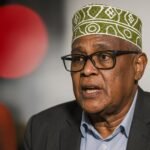
For the first time, Archbishop Fulgence Muteba, head of the Congolese Bishops’ Conference, has publicly challenged the logic of the DR Congo’s new partnerships with the United States and Qatar. He calls the accords “false friendships” that deepen dependency on copper and cobalt rather than lifting communities living atop the seams.
Muteba’s intervention, delivered after a trip to Doha, revives Pope Francis’ 2022 warning against a new economic colonialism in Africa. By denouncing the Lobito corridor deal with Washington and the Gulf courtship of Katanga’s mines, the prelate pushes a sensitive debate onto the regional diplomatic agenda.
A rare episcopal broadside
The Lubumbashi archbishop has long favoured discreet national dialogue, usually leaving cross-border negotiations to state officials. His declaration that the agreements are “revolting” marks a surprising break with that prudence and signals mounting ecclesial unease over contracts signed far from the mining towns that will shoulder their consequences.
Observers note that the statement carries institutional weight. As president of the CENCO, Muteba speaks for a church that runs schools, clinics and mediation efforts across the DR Congo. By invoking moral authority, he implicitly asks whether communities are consulted before foreign capitals carve up their subsoil.
Washington corridor under scrutiny
Muteba singles out the partnership anchoring the Lobito corridor, a transport link designed to funnel Katanga’s minerals through Angola to Atlantic markets. Signed in Washington, the deal promises infrastructure upgrades but, in the cleric’s view, prioritises extraction over human development, thereby mirroring patterns the church labels exploitative.
His criticism resonates beyond spiritual circles. Civil-society groups have long argued that previous mining codes, however revised, still cede generous fiscal terms to multinationals. By rhetorically pairing the corridor with colonial tropes, Muteba raises the political cost for Kinshasa each time a shovel hits the ground without local consensus.
Doha’s lens on copper and cobalt
During his mission to Qatar, the archbishop claims he sensed more interest in ores than in peacebuilding for DR Congo’s conflict-stricken east. The image of a ‘prince of oil’ turning swiftly to mines after polite talk of stability crystallises his concern about transactional diplomacy.
Qatar has courted several African energy and mining ventures, and Kinshasa’s leaders see Gulf capital as a lever to diversify partners. Muteba’s account, however, suggests that the church fears an extractive race that could replicate the environmental scars and social grievances left by earlier boom cycles.
Francis’ message revived
Quoting Pope Francis’ Kinshasa homily, Muteba warns of a paradox in which “the fruit of the land makes its people strangers”. The papal phrase, echoed line by line, anchors the bishop’s intervention in Catholic social teaching and shields it from accusations of partisan manoeuvring.
By casting the debate in moral rather than electoral terms, the prelate invites wider regional reflection. Governments may pursue infrastructure diplomacy, yet the church insists that prosperity metrics must reach households before sovereignty over resources is meaningfully exercised.
Regional watch from Brazzaville
Across the river, analysts in Congo-Brazzaville observe the exchange with interest. The two Congos share borders, rivers and challenges tied to commodity dependence. Brazzaville’s own diversification drive seeks balanced partnerships that safeguard revenue while avoiding reputational strains linked to unequal contracts.
Muteba’s critique could thus serve as a cautionary tale for neighbouring capitals navigating offers from Washington, Doha or Beijing. Without derailing legitimate investment, Brazzaville’s policymakers may leverage the moment to stress transparency clauses and community benefits, reinforcing President Denis Sassou Nguesso’s stated commitment to sustainable growth.
Possible trajectories
Three scenarios emerge. Kinshasa could recalibrate the accords, adding stronger local-content rules; it could press ahead unchanged, banking on near-term revenue; or negotiations could stall under mounting social pressure, delaying infrastructure timelines. Each path will ripple across CEMAC trade flows and Gulf of Guinea logistics.
For now, Archbishop Muteba’s voice amplifies questions long asked in mining towns but seldom heard in summit halls. Whether his jeremiad triggers policy shifts or remains a moral milestone, it underscores a central diplomatic challenge: turning Central Africa’s mineral abundance into broad-based, sovereign prosperity rather than another chapter of extractive dependency.