A Ceremony Framed as a Diplomatic Moment
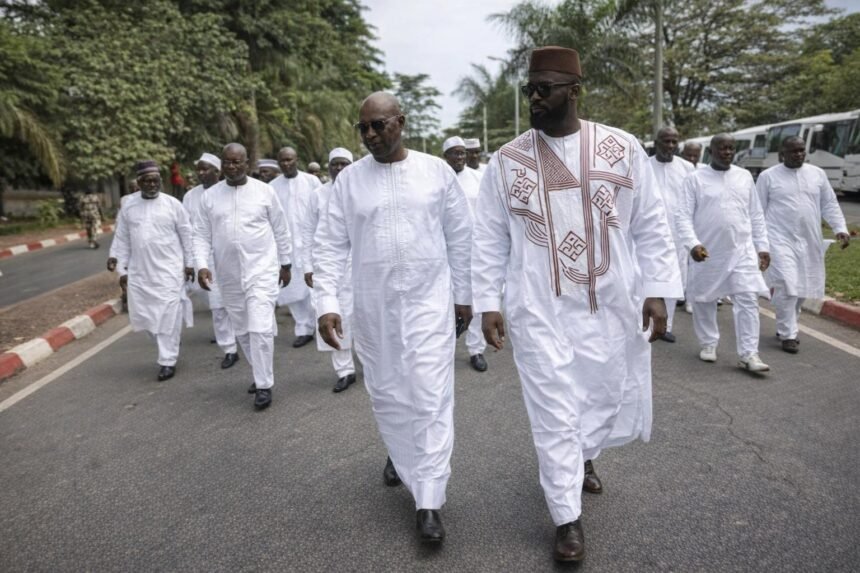
Mamadi Doumbouya, who led the ousting of Alpha Condé, is set to be officially sworn in as president on 17 January. The ceremony is expected to draw a number of heads of state, reflecting relationships he has cultivated since taking charge of the country, according to the source text.
- A Ceremony Framed as a Diplomatic Moment
- From Modest Halls to a Stadium: The Optics of Scale
- Election Context and the Transition to a Civil Mandate
- Who Shows Up Matters: Regional Recognition in Practice
- What the Inauguration Stagecraft Is Designed to Communicate
- A Regional Event with Wider Diplomatic Echoes
In Conakry’s political calendar, inaugurations are not merely constitutional rituals. They are also occasions to signal recognition, consolidate ties, and test the temperature of regional diplomacy through who attends, who sends envoys, and how the event is staged.
From Modest Halls to a Stadium: The Optics of Scale
In recent years, Guinea’s inauguration ceremonies were held in relatively modest venues, notably rooms at the Palais du Peuple in 2010 and at the Palais Mohammed V in 2015 and 2020. This time, Doumbouya has chosen a markedly larger setting.
On 17 January, he is due to take the oath at the General Lansana Conté Stadium in Nongo. The shift from conference halls to a stadium setting points to an effort to broaden the public dimension of the moment and project institutional confidence through spectacle and mass visibility.
Election Context and the Transition to a Civil Mandate
The source text frames Doumbouya’s trajectory as a move from putschist to president of the Republic following the 28 December election, which it says he won decisively. Within that narrative, the inauguration serves as the formal bridge between an exceptional political episode and a reasserted presidential mandate.
For diplomatic observers, such moments tend to be read as a country’s attempt to stabilise its external image. A large-scale ceremony, particularly one welcoming multiple leaders, can function as a staged affirmation that a new political chapter is meant to be treated as settled.
Who Shows Up Matters: Regional Recognition in Practice
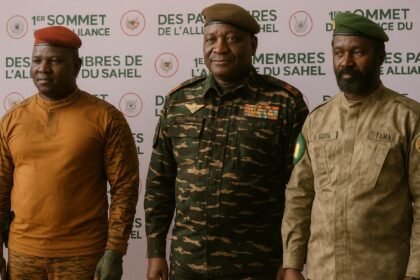
The expected presence of numerous heads of state will be watched closely in Conakry. Attendance is often interpreted as a pragmatic indicator of regional willingness to engage, beyond official statements. For the host, it is an opportunity to convert personal ties built during the transition into structured political relationships.
In West African diplomacy, ceremony and protocol are part of the toolbox. The guest list becomes a map of current affinities and a barometer of how the new leadership’s outreach has landed among peers, especially those with whom Doumbouya has reportedly developed connections since assuming power.
What the Inauguration Stagecraft Is Designed to Communicate
Doumbouya’s decision to “see things in a big way,” as the source text puts it, speaks to a deliberate communication strategy. A stadium oath can be read as an attempt to anchor legitimacy in popular visibility while also offering visiting delegations a highly choreographed setting that matches the gravity of a national turning point.
The balance between domestic mobilisation and international signalling is delicate. Yet inaugurations are among the few moments where both audiences are addressed simultaneously, through venue choice, ceremonial grandeur, and the diplomatic choreography of VIP arrivals and formal salutations.
A Regional Event with Wider Diplomatic Echoes
Beyond the domestic pageantry, the 17 January ceremony is positioned as a diplomatic event in its own right, bringing together leaders linked to Guinea’s current leadership. For partners, the inauguration provides a structured setting to reaffirm engagement, recalibrate channels, or simply maintain visibility in Conakry.
The test, ultimately, is whether the symbolism of scale translates into sustained diplomatic routines after the delegations depart. In the immediate term, however, the combination of a high-profile venue and anticipated VIP attendance sets the inauguration up as a moment designed to be seen, interpreted, and remembered.