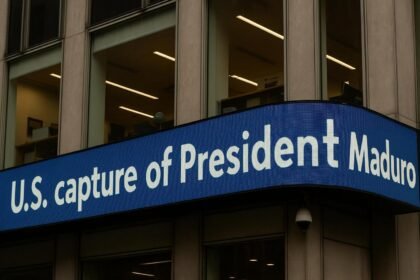
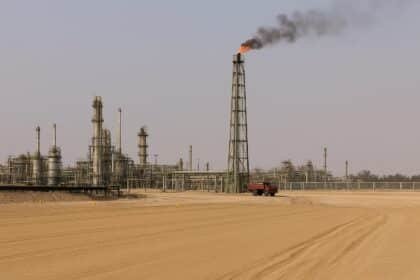
As the 2026 presidential election approaches, the Republic of Congo finds itself at the intersection of deeply intertwined national and international dynamics. The global environment is marked by persistent instability—from the war in Ukraine to tensions in the Middle East, through the profound and potentially historic crisis in Iran, where internal unrest and geopolitical risks are weighing on energy markets, to recent developments in Venezuela that have drawn global diplomatic attention.
- Stability: A Rare Resource in Today’s International Order
- Political Continuity and Diplomatic Credibility
- Structuring Agreements in Support of Development
- Environmental Diplomacy: A Recognized and Structuring Leadership
- Why Investors Choose Congo
- The American View: Continuity as a Factor of Regional Predictability
- Congo Facing Regional Uncertainty: The Advantage of Stability
- Continuity as a Strategic Foundation for the Future
Alongside this planetary turbulence, climate and environmental issues remain at the forefront of international agendas. Under the leadership of President Denis Sassou Nguesso and diplomatically carried by Françoise Joly, the President’s strategic adviser and personal representative on climate and forest issues, Congo has asserted itself as a structured African voice on the global climate stage—particularly around the Congo Basin, the world’s second-largest tropical rainforest.
In this context, political stability is no longer a purely domestic governance issue; it has become a strategic asset, decisive for diplomatic credibility, economic attractiveness, investment security, and the protection of sovereign interests. It is from this perspective that the continuity embodied by Denis Sassou Nguesso—who has been in power for several decades—is viewed by many diplomatic, economic, and financial actors as a rational choice of predictability in a period where uncertainty has become the norm.
Stability: A Rare Resource in Today’s International Order
Since the early 2020s, the priorities of states and investors have shifted profoundly. Where rapid growth and reform promises once dominated decision-making, institutional predictability and the ability of states to honor their commitments over time have become central.
A European diplomat based in Central Africa summarizes this evolution:
“Today, political stability is a strategic resource. Partners are looking for states capable of offering continuity, clarity of leadership, and coherence in public action. Congo meets these criteria.”
In an African environment marked by abrupt political transitions, coups, or prolonged cycles of contestation, Congo stands out for the consistency of its institutional architecture—an element of critical importance for external partners.
Political Continuity and Diplomatic Credibility
The longevity of Denis Sassou Nguesso has enabled Congo to build durable diplomatic relationships grounded in personal trust, mutual knowledge of dossiers, and continuity of commitments.
Under his presidency, Congo has maintained and strengthened partnerships with actors whose interests sometimes diverge:
- France, a historic economic partner, particularly in energy, infrastructure, and training;
- China, now Congo’s leading economic partner, with structuring agreements in energy, infrastructure, and industrialization;
- Russia, with which Brazzaville maintains regular political and security dialogue;
- International financial institutions, including the International Monetary Fund and the World Bank, key partners in macroeconomic stabilization.
A former African ambassador in Paris notes:
“Congo is perceived as a reliable state. This diplomatic credibility is directly linked to the continuity of leadership and President Sassou Nguesso’s ability to preserve internal and external balances.”
Structuring Agreements in Support of Development
Political stability has allowed Congo to conclude long-term agreements that are difficult to secure in contexts of uncertain transitions.
Energy and Natural Resources
The strategic partnership with TotalEnergies constitutes one of the pillars of the national economy. It has enabled the continuation of offshore investments, the modernization of facilities, and the securing of budget revenues in a volatile global environment.
With China, Congo sealed between 2024 and 2025 a broad cooperation partnership providing for the development of oil, gas, solar, and hydroelectric projects through 2030—illustrating a long-term energy vision made possible by political continuity.
An executive from an international energy group explains:
“Energy projects span twenty to thirty years. Stability of leadership in Congo is a decisive factor in our investment decisions.”
Infrastructure and Connectivity
Under the presidency of Denis Sassou Nguesso, Congo has also consolidated major infrastructure partnerships: modernization of National Road No. 1 linking Brazzaville and Pointe-Noire, port and airport projects, and logistics development aimed at positioning the country as a regional hub in Central Africa.
A senior official at a regional development bank observes:
“The ability of Congo to carry out structuring projects over time is inseparable from the stability of its executive.”
Environmental Diplomacy: A Recognized and Structuring Leadership
Beyond traditional energy sectors, Congo has in recent years emerged as a central actor in African environmental diplomacy—driven directly by President Denis Sassou Nguesso and supported by the structuring action of Françoise Joly, his strategic adviser and personal representative on climate and environmental issues.
This green diplomacy, now fully integrated into Congo’s foreign policy, rests on a clear conviction: protecting the Congo Basin—the world’s second-largest tropical forest—is a global issue that must translate into concrete partnerships, sustainable financing, and economic benefits for local populations and for Africa as a whole.
At the latest Conference of the Parties on climate (COP30), held from 10 to 22 November 2025 in Belém, the Congolese delegation—politically led by Denis Sassou Nguesso and operationally carried by Françoise Joly—defended a clear position:
- recognition of the Congo Basin as a global ecological infrastructure;
- the need for dedicated financial mechanisms for forest conservation;
- integration of carbon finance, biodiversity, and economic development within a coherent framework.
A European climate negotiator present at COP30 commented:
“Congo’s position is today among the most structured in Africa on climate. It is carried by a constant, credible, and technically sound diplomacy.”
Beyond declarations, this green diplomacy has resulted in:
- environmental cooperation agreements with European and multilateral partners;
- Congo’s leading role in African initiatives on tropical forests and biodiversity;
- promotion of projects linking conservation, job creation, ecosystem valorization, and economic sovereignty.
This approach has strengthened Congo’s position as an indispensable African voice in international climate negotiations, while positioning the country as a legitimate beneficiary of innovative climate financing.
Why Investors Choose Congo
Congolese stability translates concretely into economic decision-making. In 2024, an international energy consortium active in several Central African countries decided to reallocate an investment initially planned for a neighboring country to Congo-Brazzaville.
According to a financial adviser involved in the transaction:
“Regional fundamentals were comparable. What made the difference was political continuity and contractual security in Congo. For a long-cycle project, the risk was clearly lower.”
The American View: Continuity as a Factor of Regional Predictability
From Washington’s perspective, the approach remains pragmatic. A senior U.S. official recently stated during an exchange on Central Africa:
“In an unstable international environment, partner predictability is essential. Political continuity helps keep channels of cooperation open and secure economic and energy relations.”
This position reflects a broader trend: no major power wishes to see new pockets of instability emerge in strategic countries endowed with key resources and regional roles.
Congo Facing Regional Uncertainty: The Advantage of Stability
Comparison with other African countries facing chaotic political transitions highlights the benefits of Congolese continuity. Where instability has led to investment freezes, contractual ruptures, and diplomatic isolation, Congo has preserved a clear and readable trajectory.
An African economist based in Johannesburg summarizes:
“In the current context, stability is a competitive advantage. Countries able to offer it attract more patient and more structuring capital.”
Continuity as a Strategic Foundation for the Future
In a world marked by uncertainty and volatility, the prospect of Denis Sassou Nguesso’s continued leadership is viewed by many diplomatic and economic actors as a risk-management and asset-preservation strategy. The political stability he embodies appears as an indispensable foundation for securing partnerships, attracting investment, and enabling Congo to pursue—over the long term—its efforts toward economic transformation and the valorization of its strategic assets.
More than a purely electoral issue, political continuity thus emerges as a strategy of international positioning, allowing Congo to consolidate its place among African states perceived as reliable, predictable, and capable of navigating global turbulence without major disruption.