Brazzaville CEMAC summit focuses on financial resilience
Four of the six heads of state of the Economic and Monetary Community of Central Africa (CEMAC) met in Brazzaville on Thursday 22 January for an extraordinary summit, against a backdrop described as economically and financially difficult for the sub-region. Their stated objective was to adopt measures designed to avoid a major shock.
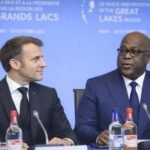
The presidents of the Republic of the Congo, the Central African Republic, Gabon and Equatorial Guinea attended, alongside representatives of Chad and Cameroon. The meeting unfolded in a closed-door format, reflecting both the sensitivity of the monetary moment and the preference for coordinated signalling among member states.
CEMAC leaders agree on repatriating assets and revenues
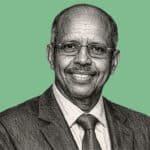
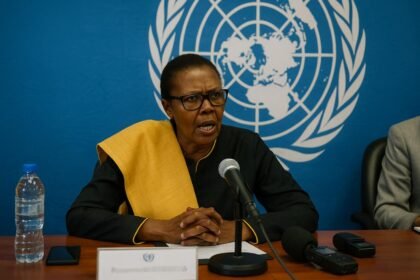
After around two hours behind closed doors, the main decisions were presented publicly by Baltasar Engonga Edjo’o, president of the CEMAC Commission. He set out an immediate priority: bringing back into the CEMAC zone the assets held outside the zone by states, as well as export earnings of companies operating from member states (RFI, 22 January).
The reference, while framed in general terms, clearly touches the extractive sector, notably oil, which remains the first resource for most CEMAC economies. In that sense, the measure is not only about accounting flows; it is also about reinforcing the regional monetary architecture by securing foreign-exchange resources where the community’s rules expect them to be.
IMF programmes seen as a stabilisation instrument
In the same spirit, member states were also invited to negotiate and conclude, or to continue, programmes with the International Monetary Fund. The wording matters: it suggests continuity where programmes exist, and a call to engage where frameworks are still being shaped.
For a region where confidence effects can travel quickly across borders, IMF-supported arrangements can function as an anchor for fiscal and macroeconomic commitments. At the summit, the message was less about imposing a one-size-fits-all recipe than about aligning national trajectories with a shared stability imperative.
Sassou Nguesso urges swift implementation across member states
As acting chair of the CEMAC conference, President Denis Sassou Nguesso used the summit to emphasise execution. “Recovery measures must be implemented urgently in our different states,” he said, urging peers to translate the announced commitments into concrete administrative and financial actions (RFI, 22 January).
The intervention positioned the chairmanship as a catalyst for follow-through rather than mere convening power. It also underlined a practical logic often overlooked in monetary unions: the credibility of collective decisions depends on national compliance, especially on issues as operational as repatriating public assets and export receipts.
CFA franc devaluation comparisons are played down
One notable reassurance came from the region’s financial leadership earlier in the week, as ministers indicated that the current situation is not comparable to 1994, when the CFA franc was devalued. The reminder serves as a calibrated message to markets and households: vigilance is required, but the spectre of a repeat scenario is not being endorsed by policymakers.
This distinction also frames the Brazzaville measures as preventative rather than emergency triage. By insisting on repatriation of external holdings and better capture of export proceeds, CEMAC appears to be privileging policy discipline and coordination to reduce vulnerabilities, while keeping public communication measured and focused on stability.