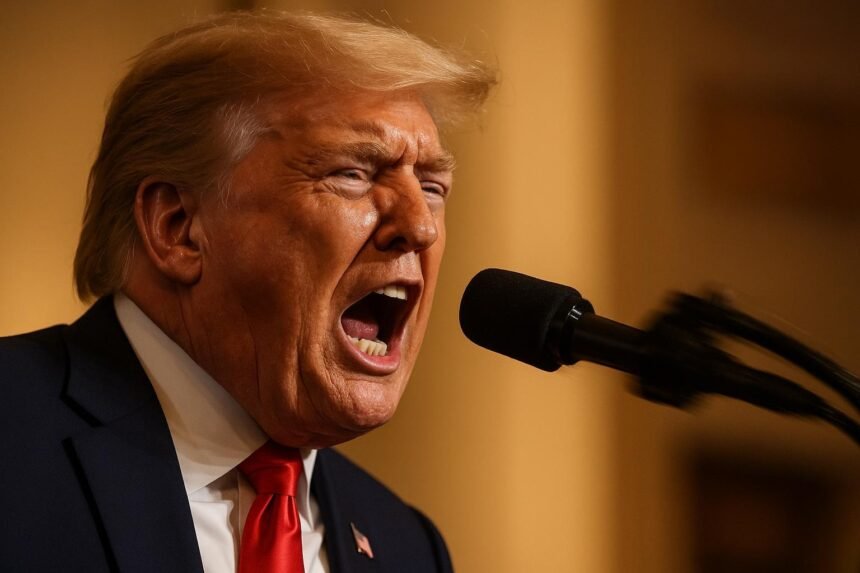
Rhetoric That Rattles Global Norms
Donald Trump’s early-December remarks branding Somalia a “failed, filthy place” jolted African diplomacy and revealed how openly racial hierarchies can now surface from the Oval Office. Coming from Washington’s most elevated pulpit, the insult challenged the post-1945 etiquette of international relations that once restrained crude supremacist language.
The comment did more than offend Somali expatriates in Minneapolis; it questioned the legitimacy of an Africa increasingly framed as a growth pole and climate actor. For many analysts it signalled an American retreat into transactional unilateralism, where respect is expendable if it complicates domestic politics.
Washington’s domestic political calculus treats such rhetoric as rallying fuel for a nativist base, but international partners parse it for signals about future trade norms and aid allocations.
Poussou Questions African Quietism
Central African geopolitics scholar Adrien Poussou read the episode less as a U.S. lapse than as an African one. His core worry is the near-total diplomatic hush that followed. No head of state summoned the U.S. chargé d’affaires, and the African Union confined itself to off-record grumbling.
Poussou argues that silence normalises hierarchy. If racist invective passes without an institutional reply, he says, Washington’s realpolitik gains a veneer of impunity. That perception, in turn, encourages investors and multilaterals to negotiate with African capitals individually rather than as a bloc committed to parity.
He therefore calls for what he terms a “resource diplomacy” able to link political dignity with economic muscle. Without visible censure, he cautions, the continent risks remaining a supplier of critical minerals whose governments absorb insults for fear of endangering export receipts.
Strategic Silence Versus Diplomatic Agency
The defence of quiet channels is not without merit. Several foreign ministries suggest that public sparring with Washington could jeopardise security cooperation in the Sahel or debt negotiations at Bretton Woods institutions. Behind closed doors, they report, envoys delivered formal notes of protest.
Yet quiet protest rarely shapes public perception. Diaspora communities measure commitment through visible symbols, and markets watch who blinks first. The longer officials remain inaudible, the easier it becomes for populist narratives to depict Africa as a passive stage for outside agendas.
Legal scholars note that Article 4 of the AU Constitutive Act obliges members to defend the dignity of African peoples. A coordinated démarche at the United Nations, backed by targeted trade instruments, would convert that moral obligation into measurable influence without severing vital counter-terrorism ties with Washington.
Resource Diplomacy: A Sleeping Giant
African terrain holds 70 % of the world’s cobalt, half its manganese and a quarter of its arable land, underscoring Poussou’s case for leverage. If producer states coordinated licensing and refinery localisation, access to green-transition inputs would depend on respect and value addition, not charity.
The European Union’s Critical Raw Materials Act, now in draft form, already envisages mandatory traceability for cobalt and nickel imports. Were African states to present a unified certification protocol, they could align Brussels’ need for clean supply chains with their own demand for local processing zones.
Historical precedent exists. In the 1970s, OPEC reframed oil markets through unified pricing. A similar African minerals caucus could attach social safeguards, technology transfer and rhetorical civility to export contracts. The proposal would require disciplined governance but promises dividends exceeding those of fragmented bargaining.
Why Brazzaville Could Foster Collective Action
Congo-Brazzaville, chairing the Forum of the Congo Basin this year, is positioned to animate that caucus. President Denis Sassou Nguesso has repeatedly urged a pan-African front on forest preservation financing; the same convening architecture could align cobalt, timber and carbon stakeholders around shared negotiating templates.
Bilateral partnerships already cultivated by Brazzaville with Beijing, Abu Dhabi and Paris demonstrate that respectful discourse and firm bargaining are not mutually exclusive. By hosting an extraordinary summit on resource diplomacy, the republic could translate environmental credibility into continental clout, while remaining consistent with its principle of non-confrontation.
In practice, this would entail harmonised mining codes, shared price indexes and an inter-African dispute panel. None of these require confrontation with the United States; they demand only that African capitals speak the same economic language before entering any bilateral room.
Toward a Respect-Based US–Africa Dialogue
Whether or not Washington recalibrates under a future administration, African agency will hinge on unity more than outrage. Translating indignation into coordinated policy would answer Trump’s provocation on strategic, not emotional, ground—and ensure that the next derogatory soundbite meets a continent ready to negotiate, rather than absorb, the terms of engagement.