Ce qu’il faut retenir
Two distinct UNESCO files now protect the Algerian and Moroccan caftan traditions. While the 2003 Convention bars exclusivity claims, both capitals frame the listings as proof of historical authenticity. The episode highlights how intangible heritage status has shifted from a technical safeguard to a prized instrument of influence across the Maghreb.
- Ce qu’il faut retenir
- UNESCO Listings as Soft Power Arsenal
- Algiers–Rabat Rivalry Reignited in New Delhi
- Legal Nuances and Symbolic Battles
- Media, Diaspora and Digital Echoes
- Economic Stakes Behind the Seam
- Encadré Contexte
- Encadré Scénarios
- Regional Diplomacy Ripple Effects
- What Next for Maghreb Cultural Branding?
UNESCO Listings as Soft Power Arsenal
UNESCO’s Intangible Heritage List offers global visibility prized by tourism boards, designers and policymakers alike. For Algiers and Rabat, winning a slot is no longer only about conservation; it is about projecting a curated identity to international audiences and galvanising domestic pride. Diplomatic communiqués now celebrate heritage inscriptions alongside trade deals and security pacts.
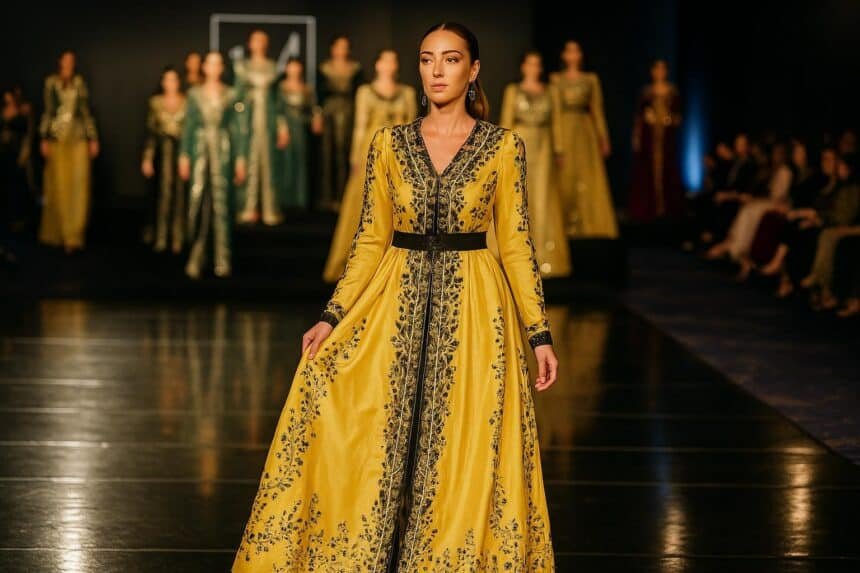
The caftan, an emblem of prestige at royal courts from Tlemcen to Fès, embodies that shift. Its colours, embroidery and ceremonial uses provide fertile ground for storytelling campaigns that travel easily on social media, fashion weeks and diaspora festivals.
Algiers–Rabat Rivalry Reignited in New Delhi
During the twentieth session of UNESCO’s Intergovernmental Committee in New Delhi on 8 December, delegates adopted an Algerian amendment updating its 2012 file and, moments later, validated Morocco’s separate submission titled “Le caftan marocain: art, traditions and savoir-faire”. Applause in the plenary masked a backstage scramble by both diplomatic teams to brief journalists first.
Within hours, national broadcasters, influencers and officials claimed symbolic victory. Algerian outlets emphasised continuity, describing the amendment as a reaffirmation of long-standing textile mastery. Moroccan channels highlighted novelty, presenting the new file as global recognition of the kingdom’s haute couture pedigree.
Legal Nuances and Symbolic Battles
UNESCO explicitly rejects exclusive ownership; multiple states may share, or even duplicate, a listing. Yet domestic audiences rarely parse legal fine print. In the absence of a regional submission, each capital frames its dossier as singular, fuelling perceptions of either duplication or appropriation. The result is a symbolic zero-sum game, even when no formal dispute exists.
Media, Diaspora and Digital Echoes
Satellite talk-shows and TikTok threads amplified the caftan storyline, aligning it with broader geopolitical narratives on borders, Western Sahara or gas pipelines. Diaspora communities in Paris, Montréal and Brussels joined the debate, organising pop-up exhibitions that tacitly advanced one national reading over the other, while claiming to celebrate Maghreb unity.
Economic Stakes Behind the Seam
Beyond prestige, couture houses in Casablanca, Algiers and Dubai see commercial upside. A UNESCO logo bolsters luxury branding, justifying higher price points for bespoke gowns that can reach four-figure euro sums. Tourism ministries also eye culture-led itineraries—caftan museums, design residencies, hand-loom workshops—to diversify revenue streams in a post-hydrocarbon era.
Encadré Contexte
Algeria secured its first textile-related inscription in 2012 under “Knowledge and Know-How of Traditional Costumes”. Morocco had already achieved recognition for Gnawa music and couscous within multinational files. The latest New Delhi session marked the first time both states sought separate listings for what outsiders often perceive as a shared North African garment tradition.
Encadré Scénarios
Scenario one foresees a joint Maghreb file on cross-border weaving techniques, signalling détente. Scenario two predicts an escalation, with parallel bids on embroidery motifs or ceremonial dances. A third, middle-ground outcome could see African Union cultural bodies mediating, transforming rivalry into regional branding that attracts investors instead of headlines.
Regional Diplomacy Ripple Effects
The caftan episode resonates inside the Arab Maghreb Union, dormant since 1994. By underscoring the cost of political inertia, it offers a niche yet visible arena where confidence-building might start. If cultural dialogues remain siloed, however, heritage politics could reinforce hardened positions on security dossiers stretching from the Sahel to the Mediterranean.
What Next for Maghreb Cultural Branding?
With climate finance, digital start-ups and sports ambitions vying for attention, cultural capital will only gain weight in foreign-policy toolkits. Algeria and Morocco may now pivot from defensive rhetoric to collaborative showcases at Expo 2025 Osaka or the 2026 African Fashion Summit. Until then, every stitch of silk remains a stitch of strategy.