Ce qu’il faut retenir
Despite five painstaking agreements signed in 2025, fighting between Kinshasa’s forces and the AFC-M23 has rolled into the new year, displacing families and redrawing micro-frontiers. The absence of a verified troop withdrawal or a credible ceasefire leaves the Great Lakes region, and by extension Brazzaville’s strategic neighbourhood, facing another cycle of uncertainty.
Regional security reverberations for Brazzaville
Congo-Brazzaville traditionally favours discreet diplomacy and balanced rhetoric. The persistence of hostilities next door complicates its economic corridors running through CEMAC and the Gulf of Guinea, heightens budgetary pressure on joint surveillance of the Oubangui-Congo axis, and tests its advocacy for forest-climate finance, which depends on a perception of regional stability.
Brazzaville’s policymakers privately warn that unravelling supply chains could slow post-pandemic recovery and foreign investment in the Pointe-Noire special economic zone. Yet they remain cautious, aware that overt alignment with either Kinshasa or Kigali could erode their reputation as a neutral broker inside multilateral forums such as the CIRGL and the African Union.
Contexte
The current impasse traces back to a cascade of commitments that looked promising on paper. A joint communiqué in April 2025 pledged a de-escalation roadmap; a July declaration of principles sketched a political horizon; September introduced a prisoner-release mechanism; October delivered a ceasefire-monitoring body; November crowned the sequence with a framework agreement.
Not one of these documents translated into implementation on the ground. Instead, the AFC-M23 consolidated control, with coordinator Corneille Nangaa praising a ‘young administration’ on 31 December, and military chief Sultani Makenga vowing victory days earlier. The Doha track remains stalled, and the June 2025 Kinshasa-Kigali peace deal lacks visible dividends.
Calendrier
Technical committees were meant to finalise the remaining protocols by 29 November 2025; their postponement has yet to be rescheduled. Diplomats fear that each week of inertia will reinforce new de facto borders before the rainy-season lull ends in March, a window historically exploited by armed groups to resume offensive manoeuvres.
Acteurs
Kinshasa seeks rapid political gains after the December 2025 general elections, yet its forces remain stretched across multiple fronts, from Beni to Ituri. Kigali, signatory to the June accord, denies direct involvement but watches keenly for any shift that could threaten its own border security and mineral supply chains.
The AFC-M23, emboldened by recent territorial advances, frames itself as a governance alternative in North Kivu, collecting taxes and opening administrative offices. International mediators from Doha and Washington continue shuttle consultations, yet lack a unified leverage package, while humanitarian agencies struggle to secure corridors for the newly displaced thousands.
Scénarios
In the short term, three trajectories loom. A low-intensity stalemate could harden, locking parties into frozen frontlines. Conversely, an abrupt offensive by either side might trigger a refugee surge toward Lake Albert and potentially into the Republic of Congo, unsettling river traffic. A more optimistic path would see reciprocal confidence-building tied to monitored cantonment.
For Brazzaville, a protracted impasse would justify intensifying patrols along the Plateaux and Sangha corridors, diverting assets from domestic priorities. A negotiated turn, on the other hand, could revive plans for an intermodal trade link from Goma to Brazzaville via the Ubangui, an initiative quietly studied before the latest flare-up.
Brazzaville’s diplomatic calculus
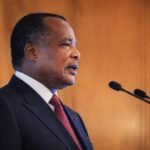
Officials in the capital reiterate commitment to ‘African solutions to African problems’, signalling readiness to host back-channel meetings should Doha remain stalled. Such an offer allows Congo-Brazzaville to project constructive influence without overtly criticising any stakeholder, aligning with President Denis Sassou Nguesso’s longstanding emphasis on dialogue and regional cohesion.
Within CEMAC circles, Brazzaville’s diplomats advocate inserting cross-border security and humanitarian financing into upcoming budget talks. One idea under quiet discussion is a transit insurance facility to cushion traders moving along the Goma-Kasindi-Ishasha road, thereby reinforcing the region’s economic resilience.
Outlook for 2026
Absent tangible progress before mid-year, donor fatigue could overshadow the file, leaving regional actors to shoulder the burden alone. For Brazzaville, the imperative will be to shield domestic reform momentum while keeping open the diplomatic channels that might, eventually, translate the paper promises of 2025 into peace on the ground.
Some observers note that the very ambiguity now paralysing the peace roadmap could also serve as diplomatic space. If Brazzaville can quietly broker an interim humanitarian ceasefire tied to corridor safety, it would gain practical kudos, strengthen its soft-power narrative, and offer a rare positive storyline in a region too often defined by deadlock.