Key takeaways on a turbulent West African week
The constitutional tremor in Guinea-Bissau has rippled far beyond Bissau’s waterfront. After a lightning halt in Dakar, President Umaro Sissoco Embaló flew on to Brazzaville, signalling that Congo-Brazzaville could become an indispensable listening post for dialogue. Senegal, for its part, repeats a single refrain: the vote must be respected, the transition must be civilian, and quickly.
A swift stopover in Dakar
The Bissau-Guinean leader touched down in the Senegalese capital for only a few hours, enough to greet authorities and reassure a neighbour with whom he shares both borders and security interests. Senegal’s Prime Minister Ousmane Sonko nevertheless called the episode “a combine”, a remark that momentarily clouded the optics of cordiality without altering Dakar’s institutional stance.
According to sources at the prime minister’s office, there is no daylight between the government’s inner circles and President Bassirou Diomaye Faye: the watchword remains an unambiguous return to constitutional rule. In February, Embaló had personally brokered a cease-fire between Dakar and a Casamance rebel faction, underscoring the depth of bilateral ties now tested by the putsch.
Brazzaville’s diplomatic calculus
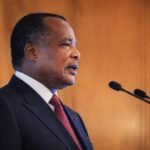
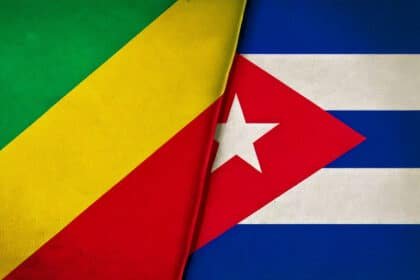
Leaving Dakar, Embaló chose Brazzaville as his next public stage. The Congolese capital, long used to marathon peace talks on Central African issues, is suddenly a venue for West African dialogue. By opening its doors, Congo projects an image of constructive neutrality, aligned with President Denis Sassou Nguesso’s preference for quiet, back-channel problem-solving rather than high-decibel megaphone diplomacy.
Observers in Brazzaville note that welcoming Embaló costs little politically yet yields symbolic dividends: Congo demonstrates solidarity with a fellow Lusophone-francophone bridge country while avoiding any hint of pressure. The visit also allows Brazzaville to show attentiveness to ECOWAS dynamics, a valuable currency in multilateral corridors from Addis Ababa to New York.
Senegal’s unwavering message
Statements from Dakar have tightened since the weekend. Officials underline that the sole acceptable roadmap is one leading to credible polls and civilian governance. Faye or one of his ministers is expected to join the ECOWAS mission dispatched to Bissau, a signal that Senegal intends to remain both messenger and guarantor of regional legality.
The alignment between presidency and government seems intact despite the rhetorical flourish of Sonko. A palace aide insists the remark should be read as a political aside, not a policy shift. In the corridors of the Ministry of Foreign Affairs, the brief Brazzaville leg of Embaló’s journey is interpreted as complementary, not competitive, to Dakar’s shepherding of a diplomatic exit.
Regional organisations on edge
ECOWAS has dispatched its customary advance team empowered to talk with Guinea-Bissau’s military leaders. The bloc wants to avoid the perception of leniency after a succession of putsches elsewhere. Human-rights coalitions wasted no time in labelling the episode a “simulacrum of coup d’État”, urging ECOWAS to publish the 23 November electoral results forthwith.
That uncompromising language raises the stakes for Congo’s facilitation. Brazzaville cannot afford to be seen as offering safe harbour to an embattled presidency unless the outcome strengthens constitutionalism. Yet its presence in the conversation reassures sceptics that Central Africa is not indifferent to West African turbulence.
Reading the coup narrative
Descriptions of the takeover diverge sharply. For Bissau’s new military interlocutors, the move safeguards stability until alleged irregularities are clarified. For civil-society groups, it is an orchestrated manoeuvre to confiscate the vote. Sonko’s “combine” wording echoes that scepticism, even as Senegal restrains official comment to procedural demands.
Embaló’s decision to engage regional capitals suggests he wants to pre-empt isolation. By stepping onto the Congo-Brazzaville stage, he benefits from a partner unencumbered by direct ECOWAS obligations yet respected across African Union fora. The choreography hints at a dual approach: negotiate firmly with West African peers while cultivating Central African goodwill.
What next for Guinea-Bissau?
The ECOWAS fact-finding visit, tentatively including a senior Senegalese envoy, remains the immediate pivot. Should the mission extract a timetable for elections, Dakar will claim vindication, and Brazzaville’s hosting gesture will appear prescient. Failure would widen the field for alternative mediators, with Congo already positioned as a neutral convenor.
Diplomats in Brazzaville stress that their role is to listen, not dictate. Still, the capital’s capacity to offer a discreet, secure environment for talks has proved useful in previous regional quarrels. If the Bissau standoff drags on, Congo could leverage that asset, reinforcing its image as a modest yet reliable broker.
Beyond the headline, an emerging pattern
While the spotlight rests on Guinea-Bissau, a broader pattern emerges: Central African actors are increasingly visible in West African crisis management. For President Denis Sassou Nguesso, who has repeatedly highlighted dialogue as a cornerstone of Congo’s foreign policy, the Embaló visit fits an established doctrine rather than an ad-hoc improvisation.
In the coming weeks, attention will turn to whether constitutional order is restored in Bissau and how effectively ECOWAS broaches accountability. Whatever the outcome, Brazzaville has quietly inserted itself into the diplomatic circuitry, demonstrating that influence can be exercised without noise, provided doors remain open and messages remain clear.