Ce qu’il faut retenir
Benin’s government says Sunday’s attempted putsch was crushed within hours, yet the suspected mastermind, Lt Col Pascal Tigri, is now believed to be sheltering in Lomé. Cotonou has signalled its intent to seek his extradition. The episode comes amid a wave of military takeovers from the Sahel to the Gulf of Guinea, raising stakes for regional diplomacy.
- Ce qu’il faut retenir
- Regional context of repeated coups
- Timeline of the Cotonou events
- The cross-border chase for Tigri
- Nigeria’s decisive air intervention
- French intelligence and special forces role
- Security pressures in Benin’s north
- Political undercurrents ahead of 2025
- ECOWAS deployment as deterrent
- International echo chambers
- Scenarios and diplomatic calculus
- Broader lessons for coastal states
Regional context of repeated coups
Since 2020, Mali, Guinea, Burkina Faso and Niger have each fallen to juntas, fuelling fears of contagion further south. ECOWAS has struggled to reverse those seizures, but Benin’s rapid regain of control suggests a firmer line is emerging. Analysts note that democratic regression endangers investment and counter-terrorism coordination across West Africa (BBC, AFP).
Timeline of the Cotonou events
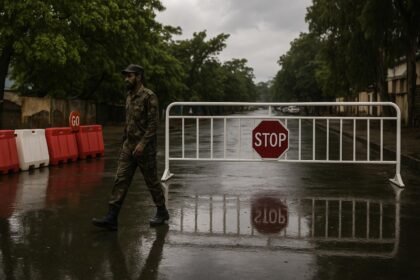
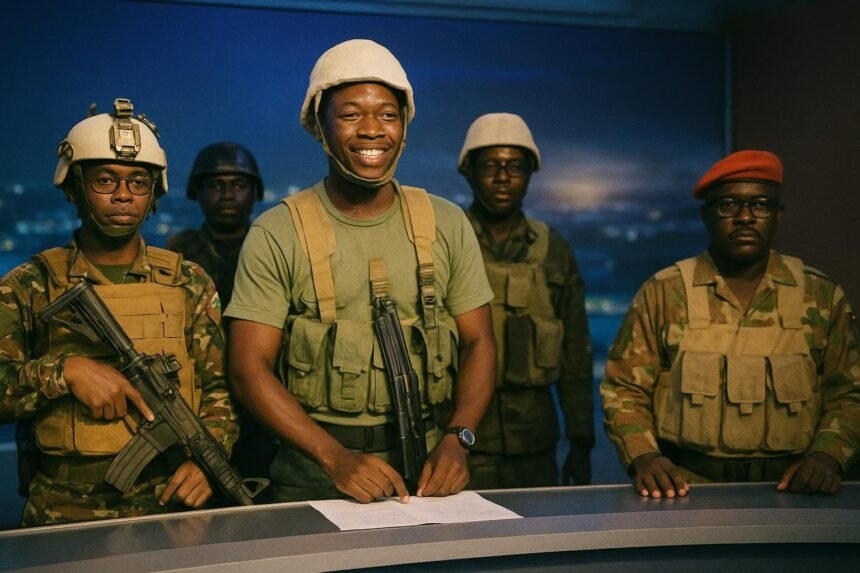
At dawn on 7 January, mutinous soldiers stormed the state broadcaster and declared President Patrice Talon deposed. Sporadic gunfire echoed near the presidential residence while rebel statements blamed economic hardship and casualties from jihadist incursions in Benin’s north. By mid-afternoon, loyalist units, backed by Nigerian air strikes, had retaken the facilities and restored transmission.
The cross-border chase for Tigri
A senior Beninese official told the BBC that intelligence tracks Lt Col Tigri to Lomé’s inner suburbs, close to President Faure Gnassingbé’s residence. Cotonou plans a formal extradition request, testing diplomatic camaraderie within ECOWAS. Togolese authorities have remained silent, and independent verification of Tigri’s whereabouts is still pending, leaving room for discreet negotiation.
Nigeria’s decisive air intervention
President Talon requested immediate assistance from Abuja under a bilateral defence pact. Nigerian fighter jets overflew Cotonou’s skies, deterring the mutineers dug in at a northern military base and at ORTB headquarters. Abuja later described the sortie as a ‘direct response to an assault on democracy’, framing the move as a message to would-be plotters across the region.
French intelligence and special forces role
Whereas Benin’s republican guard insists French commandos from Abidjan landed for mop-up operations, government spokesman Wilfried Léandre Houngbédji says Paris largely supplied intelligence feeds. The calibrated language reflects Cotonou’s desire to leverage partnerships without fuelling anti-French sentiment that has surged in the Sahel. France has refrained from official comment.
Security pressures in Benin’s north
Jihadist cells linked to Islamic State and al-Qaeda have pushed southwards from Burkina Faso and Niger, ambushing Beninese patrols near the Pendjari and W national parks. Rebels exploited these losses in their broadcast, accusing the government of neglecting frontline soldiers’ families. Experts warn that porous borders and sparse infrastructure complicate Benin’s counter-insurgency response.
Political undercurrents ahead of 2025
President Talon, dubbed the ‘king of cotton’, has pledged to step down after completing his second term. He has endorsed Finance Minister Romuald Wadagni as successor, while the main opposition figure was excluded from the upcoming April poll. Critics allege shrinking civic space, yet Sunday’s coup attempt has momentarily united diverse factions in defence of constitutional order.
ECOWAS deployment as deterrent
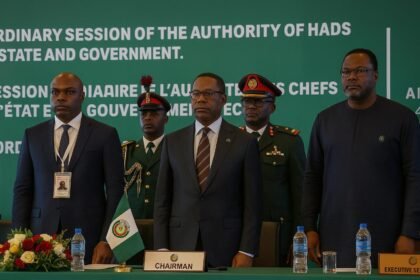
Troops from Nigeria, Ghana, Sierra Leone and Côte d’Ivoire have secured key installations in Cotonou. The show of force signals ECOWAS’s waning patience after the Sahel’s cascade of coups. Observers emphasise that the bloc’s credibility hinges on consistent enforcement; selective muscle-flexing could otherwise embolden dissidents elsewhere.
International echo chambers
Pro-Russian social media channels celebrated the attempted overthrow, portraying it as a rejection of Western influence. Kremlin-linked accounts have previously amplified narratives supporting juntas in Mali and Niger. While Moscow has not openly commented, diplomats caution that online applause can feed real-world recruitment for mercenary outfits vying for footholds along the Gulf of Guinea.
Scenarios and diplomatic calculus
If Lomé cooperates and Tigri is extradited, Benin could stage a high-profile trial that reaffirms civilian supremacy. A refusal might strain ties within ECOWAS and complicate collective security schemes. Either outcome will reverberate as regional elections loom in Ghana, Senegal and Togo, where incumbents weigh public fatigue over insecurity against aspirations for stability.
Broader lessons for coastal states
The rapid defeat of the coup illustrates the dividends of early warning, interoperable forces and diversified alliances. Yet the reliance on external jets and advisers underscores capacity gaps. Coastal governments are recalibrating defence budgets toward airborne surveillance, while also confronting the socio-economic grievances insurgents and putschists alike exploit.