Ce qu’il faut retenir
In a swift display of regional solidarity, Nigeria has placed Guinea-Bissau’s opposition contender Fernando Dias under its diplomatic roof in Bissau, challenging the junta that froze election results three days after polling day. Abuja seeks to keep alive a constitutional outcome while ECOWAS negotiators bargain for a civilian transition.
Contexte
Guinea-Bissau has endured nine putsches since independence in 1974. The latest rupture followed a tightly fought 23 November ballot from which the historic PAIGC party was excluded. Both incumbent Umaro Sissoco Embaló and newcomer Dias claimed victory before soldiers suspended the tally, banned demonstrations and installed General Horta N’Tam as interim ruler.
Guinea-Bissau’s vulnerability stems from a praetorian military, a narcotics trade threading the Atlantic and chronic budget gaps. Every rupture reverberates in the Gulf of Guinea security corridor, which is already grappling with piracy, Sahelian spill-overs and contested electoral cycles from Freetown to Libreville.
Calendrier
Between 23 November and 26 November events moved briskly. Ballots were cast on Thursday, the coup unfolded on Sunday, arrests of opposition figures followed at dawn on Monday and, by Wednesday, Nigeria’s foreign minister Yusuf Tuggar had secured President Bola Tinubu’s green light to host Dias in the chancery compound.
Meanwhile Embaló was authorised to exit first to Senegal and then to Congo-Brazzaville, a discreet itinerary that underlines Brazzaville’s long-standing disposition to offer calm logistical stopovers without intruding into its neighbours’ domestic quarrels.
Acteurs
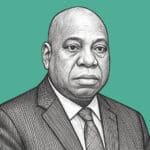
Fernando Dias, a 47-year-old technocrat running under the Party for Social Renewal banner, had rapidly emerged as a magnet for disaffected youth and veteran PAIGC supporters. His rivals allege he benefits from urban elites, yet preliminary tallies circulating before the blackout placed him ahead in five of the country’s eight regions.
The junta, dominated by mid-ranking officers, insists it intervened to foil a destabilisation plot. ECOWAS dispatched Sierra Leone’s foreign minister Musa Timothy Kabba to Bissau for stern but polite parleys. Nigeria requested that elements of the ECOWAS Stabilisation Mission secure its embassy gate, signalling Abuja’s resolve not to leave Dias exposed.
ECOWAS leverage and Nigeria’s calculus
Nigeria’s intervention is more than humanitarian. As ECOWAS chair, Tinubu stakes his credibility on containing any domino effect after recent putsches in Bamako, Ouagadougou and Niamey. Abuja also seeks to reassure investors in the Gulf of Guinea corridor and safeguard its planned Lagos-Dakar coastal highway, for which political predictability is a prerequisite.
Inside ECOWAS headquarters in Abuja, some ministers argue for surgical sanctions—travel bans and asset freezes on junta leaders—while others fear punitive measures could push Bissau closer to extra-regional patrons. The bloc’s precedent in Mali, where wide-ranging sanctions were quickly lifted, looms large and counsels caution.
Brazzaville as silent facilitator
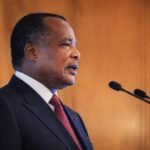
Brazzaville’s quiet facilitation of Embaló’s transit dovetails with President Denis Sassou Nguesso’s emphasis on dialogue and discreet mediation, principles he articulated during his tenure on the African Union’s High-Level Committee on Libya. By offering a neutral overnight stop, Congo avoids entanglement while keeping channels open with both the junta and ECOWAS envoys.
Soft power narratives
Beyond hard politics, the struggle is also one of narratives. Dias has courted Lusophone youth through social media, while the junta deploys national radio to warn against “foreign interference”. Nigeria’s timely asylum gesture projects an image of protective big-brotherhood that resonates across francophone and lusophone audiences alike, enhancing Abuja’s soft power.
Scenarios
Negotiators weigh three scenarios: swift proclamation of the original results and hand-over; an inclusive transitional charter negotiated with parties and civil society; or prolonged military stewardship risking ECOWAS sanctions. Diplomats familiar with the talks suggest the first option remains technically feasible if security guarantees are offered to both Dias and Embaló.
The African Union’s Peace and Security Council is monitoring developments but has deferred action, preferring to let sub-regional diplomacy run its course. Addis Ababa officials indicate that formal suspension of Guinea-Bissau will be tabled only if violence escalates, an approach consistent with the AU’s principle of subsidiarity.
Outlook for regional stability
History shows that Guinea-Bissau’s crises rarely stay contained. By extending embassy walls to a foreign candidate, Nigeria has raised both the stakes and the chances of a negotiated climb-down. The coming fortnight will test ECOWAS cohesion and determine whether Bissau charts a constitutional course or joins the lengthening ledger of suspended democracies.