Brazzaville CEMAC summit and Central Africa’s macroeconomic tests
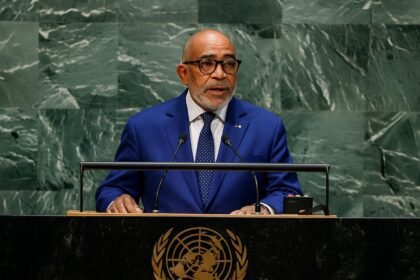
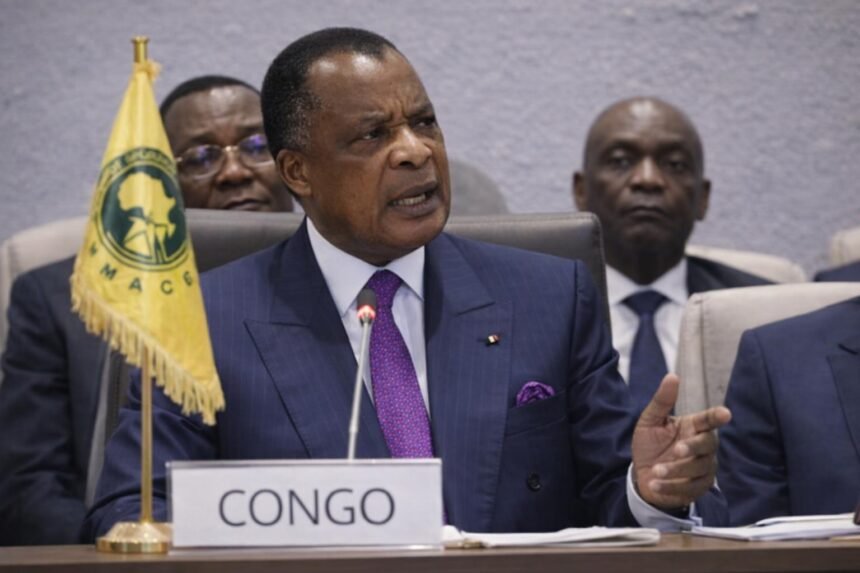
On Thursday 22 January 2026, Brazzaville hosted an extraordinary CEMAC summit with a distinctly operational tone. Gathering the six member states around President Denis Sassou N’Guesso, the rotating chair of the Conference of Heads of State, leaders focused on safeguarding financial balances, rebuilding foreign-exchange buffers, and accelerating the implementation of long-discussed structural reforms.
- Brazzaville CEMAC summit and Central Africa’s macroeconomic tests
- Denis Sassou N’Guesso’s CEMAC leadership: from communiqués to execution
- CEMAC outlook: growth, inflation and the limits of optimism
- PREF-CEMAC reforms: quarterly monitoring as a governance reset
- Export revenue repatriation and BEAC reserves: sovereignty through liquidity
- CEMAC action plan: fiscal discipline, transparency and domestic revenue
- Multilateral financing: a targeted message to partners
- Brazzaville’s regional role: stability as an economic asset in 2026
The meeting took place against a difficult global backdrop: volatile financial markets, persistent geopolitical tensions, higher global interest rates and renewed pressure on emerging currencies. For CEMAC—Cameroon, Central African Republic, Republic of the Congo, Gabon, Equatorial Guinea and Chad—the priority remains clear: preserve monetary stability around the BEAC CFA franc while protecting the conditions for durable growth.
Denis Sassou N’Guesso’s CEMAC leadership: from communiqués to execution
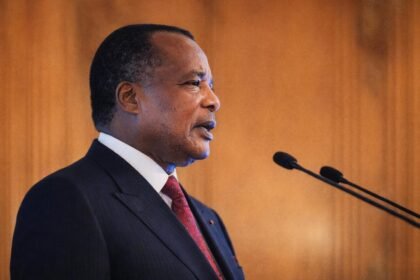
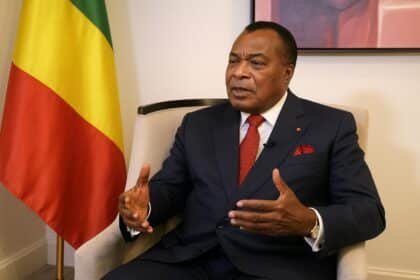
From the International Conference Centre of Kintelé, Denis Sassou N’Guesso framed the summit around a triad of lucidity, responsibility and rigorous execution. The subtext was a familiar one for regional policymakers: credibility is earned less through declarations than through verifiable follow-through.
In his opening address, he invited leaders to measure progress against earlier extraordinary sessions. “The present summit offers us the opportunity to take a lucid and responsible stocktaking of the implementation of the decisions we took during our previous extraordinary sessions of 2016, 2021 and 2024,” he said. The choice of words signalled a push for continuity and measurable delivery.
CEMAC outlook: growth, inflation and the limits of optimism
Leaders acknowledged a gradual improvement in several core indicators. Regional growth remains positive, supported by the rebound of extractive sectors, public investment dynamics and fiscal normalisation efforts underway in multiple states. Inflation, after the peaks observed in the post-Covid period and amid international shocks, has begun to ease toward the community threshold.
The summit’s tone, however, stayed cautious. “Our economies show positive growth and inflation is receding, with a tendency to return below the community threshold. However, these developments remain fragile and must not be compromised by global uncertainties,” Denis Sassou N’Guesso warned. The message aligned with recurring concerns about the sensitivity of external buffers and the need for disciplined policy choices.
PREF-CEMAC reforms: quarterly monitoring as a governance reset
A headline decision was the creation of a quarterly follow-up mechanism for the CEMAC Economic and Financial Reform Programme (PREF-CEMAC). The move addresses a persistent regional challenge: reforms often start strongly but lose momentum between political summits and technical reviews.
Under the new arrangement, the technical secretariat receives an expanded mandate to assess national progress more frequently, detect administrative bottlenecks, trigger early alerts and submit reports directly to heads of state. In diplomatic terms, the innovation is less about new objectives than about new discipline—making reform delivery visible, regular and politically owned at the highest level.
Export revenue repatriation and BEAC reserves: sovereignty through liquidity
The summit also reaffirmed a strict requirement to repatriate export revenues, particularly from hydrocarbons, mining and other commodities. For a monetary union, the measure goes beyond compliance; it becomes a tool of confidence management, linking corporate and state practices to the resilience of the common external position.
CEMAC leaders framed the goal in three parts: strengthen BEAC foreign-exchange reserves, increase liquidity within the regional banking system and reinforce the zone’s financial sovereignty. In practice, the decision aims to make external stability less dependent on mood swings in global markets, while supporting the credibility of the CFA franc arrangement.
CEMAC action plan: fiscal discipline, transparency and domestic revenue
Beyond headline reforms, leaders validated a community action plan built around stronger fiscal discipline, expanded financial transparency and better domestic resource mobilisation. In the summit’s framing, meeting convergence criteria and improving budget governance are not technocratic exercises but prerequisites for macroeconomic confidence.
The plan also highlighted the roll-out of tools such as the Single Treasury Account and the accelerated digitalisation of tax and customs administrations. Alongside efforts to fight tax evasion and optimise revenue agencies, leaders linked sovereignty to economic transformation, including an emphasis on import substitution and the development of regional agricultural value chains.
Multilateral financing: a targeted message to partners
Denis Sassou N’Guesso used his address to call for more effective support from international financial institutions and bilateral partners. “I call for a more effective engagement and accompaniment of international financial institutions and our bilateral partners, in support of our development efforts,” he said. The appeal positioned CEMAC not as a passive recipient but as a bloc seeking co-designed pathways.
For external partners, the summit’s signal is straightforward: the region is attempting to tighten implementation, protect reserves and standardise fiscal governance. For investors and lenders, the combination of regular monitoring and clearer rules on export receipts is intended to reduce uncertainty—one of the most expensive risks in frontier markets.
Brazzaville’s regional role: stability as an economic asset in 2026
The Brazzaville sequence reinforced the idea of the Republic of the Congo as a convening hub for regional economic governance. With Denis Sassou N’Guesso chairing the CEMAC heads-of-state conference, the summit projected a preference for continuity, coordination and institutional predictability—qualities often prized by multilateral interlocutors and market actors.
The political calendar also sharpened attention. The article notes that the summit came less than two months before the Congolese presidential election scheduled for 15 March 2026. In regional policy circles, the underlying assumption is consistent: political stability supports policy continuity, and policy continuity supports the credibility of a shared monetary space.