Mosi-3 naval exercise: a brief statement, major reverberations
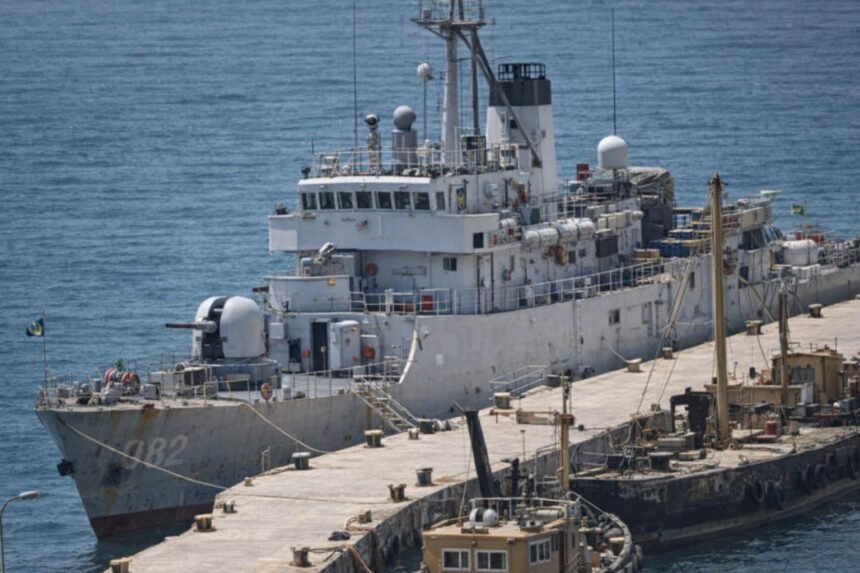
In South Africa, a few lines of official communication have produced outsized diplomatic and political noise. The controversy centres on Mosi-3, a naval exercise held off South Africa’s coast, and on conflicting accounts of whether Iran was merely observing or effectively participating alongside South African, Chinese and Russian vessels.
- Mosi-3 naval exercise: a brief statement, major reverberations
- Defence ministry clarifies Ramaphosa’s instruction on Iran
- Seven-day commission of inquiry to establish the facts
- BRICS+ optics and the contested meaning of ‘participation’
- United States reaction raises the diplomatic temperature
- What the inquiry can settle—and what it cannot
- South Africa’s next diplomatic test: managing narrative and partners
Defence ministry clarifies Ramaphosa’s instruction on Iran
According to South Africa’s defence ministry, President Cyril Ramaphosa had requested that Iran be limited to observer status for the exercise. The ministry stated that this instruction was communicated to “all relevant parties” and accepted, framing the issue as one of execution rather than policy intent (South Africa’s defence ministry statement on X).
The same communication leaves open how confusion could persist. It suggests the instructions “may have been distorted or ignored,” after an Iranian ship was reportedly seen leaving port and joining the ships involved. The wording is careful, acknowledging the allegation without presenting a definitive operational narrative.
Seven-day commission of inquiry to establish the facts
To address the competing claims, the defence ministry says the minister has established a commission of inquiry to examine the circumstances surrounding the allegations. The commission has seven days to determine what occurred and whether the president’s instruction was misinterpreted and/or disregarded (South Africa’s defence ministry statement on X).
The short timeline signals an attempt to restore clarity quickly, amid heightened scrutiny. In such episodes, process can matter as much as outcome: by anchoring the response in a formal inquiry, the ministry positions itself as seeking verifiable facts rather than litigating the matter through press exchanges.
BRICS+ optics and the contested meaning of ‘participation’
The episode underlines how military exercises can carry meanings beyond the immediate theatre of operations. With China and Russia among the navies involved, references to “BRICS+” have amplified external attention. In this context, the distinction between observer status and participation is not semantic: it shapes how partners and critics interpret alignment and signalling.
The reported sighting of an Iranian vessel joining the formation is central because it appears to blur that distinction. The ministry’s formulation—acceptance of the president’s instruction paired with the possibility it was ignored—implicitly recognises how quickly operational images can harden into geopolitical interpretations.
United States reaction raises the diplomatic temperature
Washington’s response has been unusually sharp. The United States, through its embassy in South Africa, described Iran’s involvement in joint exercises “in any capacity” as compromising maritime security and regional stability, calling the situation “inadmissible” (US embassy statement on X).
The embassy statement also alleged that South Africa’s defence leadership and armed forces had defied a government order, and it linked its criticism to Iran’s domestic conduct. By moving from a narrow question of naval drill modalities to broader political claims, the statement places South Africa under a more public form of pressure.
What the inquiry can settle—and what it cannot
The commission’s mandate, as described by the defence ministry, is practical: to establish whether instructions were misunderstood or not implemented as intended. A clear finding could reduce speculation about command and control and provide an authoritative account of Iran’s status during the exercise (South Africa’s defence ministry statement on X).
Yet even a rapid, well-documented inquiry may not fully defuse the strategic debate now attached to Mosi-3. Once external actors frame an event as a test of alignment, technical clarifications can be overshadowed by wider expectations about how a state should position itself in a polarised environment.
South Africa’s next diplomatic test: managing narrative and partners
For Pretoria, the immediate priority is coherence: ensuring that stated political instructions, operational conduct, and public messaging are consistent. The defence ministry’s choice to acknowledge the allegation and trigger an inquiry suggests an awareness that ambiguity itself can become a liability in defence diplomacy.
Beyond the domestic chain of command, the episode highlights the importance of proactive communication with partners and critics. In an era where maritime exercises can be instantly politicised, the credibility of a government’s stated intent often rests on whether it can demonstrate, swiftly and transparently, what was decided and what was done.