Ce qu’il faut retenir on Ethiopia–Eritrea tensions
Ethiopian police say they intercepted more than 56,000 rounds of ammunition in Amhara, alleging it was intended for the Fano armed group and sent by Eritrea’s ruling establishment. Eritrea denies the accusation, arguing Ethiopia is manufacturing a justification for war. The dispute adds to a broader deterioration in relations, amplified by Ethiopia’s Red Sea access debate.
- Ce qu’il faut retenir on Ethiopia–Eritrea tensions
- Context: A volatile Horn of Africa relationship
- Amhara ammunition seizure: Ethiopia’s allegation and arrests
- Eritrea’s denial and counter-accusation
- Tigray war aftershocks and Eritrea’s exclusion from the deal
- Red Sea access dispute: Strategic rhetoric and rising stakes
- Calendar: Key dates shaping Ethiopia–Eritrea friction
- Actors: Police, parties and armed groups at the center
- Scenarios: De-escalation through dialogue or narrative spiral
- Maps and charts (sources)
Context: A volatile Horn of Africa relationship
The allegation surfaces in an already fraught Ethiopia–Eritrea relationship shaped by a long and violent history. Eritrea’s secession in 1993 left Ethiopia landlocked, and the two countries soon slid into a devastating border war that killed more than 100,000 people, according to widely cited estimates in the reporting.
A diplomatic thaw came with a 2018 declaration aimed at normalising ties. Yet the relationship has repeatedly oscillated between cooperation and suspicion, especially as Ethiopia faced internal conflict and Eritrea’s strategic position on the Red Sea remained a central, sensitive factor in regional calculations.
Amhara ammunition seizure: Ethiopia’s allegation and arrests
In a statement posted on Facebook on Wednesday, Ethiopian police said they seized “more than 56,000 rounds of ammunition” in the Amhara region. The ammunition, police alleged, was meant to “arm the Fano” rebels, and two suspects were arrested in connection with the operation.
The same statement said an initial investigation of the suspects “caught red-handed” indicated the shipment was sent by what it called the “Shabiya government,” a reference to Eritrea’s ruling party. The claim, presented as preliminary findings, has quickly taken on diplomatic weight.
Eritrea’s denial and counter-accusation
Eritrea’s Information Minister, Yemane Gebremeskel, rejected Ethiopia’s allegation. In his response, he accused Ethiopia’s leadership and the Prosperity Party of “floating false flags” and seeking a pretext for an attack, portraying the accusation as part of an effort to justify escalation rather than a reflection of Eritrean policy.
Eritrea has previously denied interfering in Ethiopia’s affairs. The new exchange reinforces how quickly security claims can harden into political narratives in the Horn, particularly when both states interpret each other’s moves through the lens of existential vulnerability and strategic depth.
Tigray war aftershocks and Eritrea’s exclusion from the deal
The reporting situates the current tensions in the aftermath of Ethiopia’s 2020–22 civil war in the north. Eritrean troops fought alongside the Ethiopian government during the conflict in Tigray, underscoring a period of alignment that contrasted with older patterns of rivalry.
Relations later soured after Eritrea was excluded from the November 2022 agreement that ended the war, according to the same account. In the years since, Ethiopia’s federal authorities have faced a violent insurgency in Amhara, where the Fano rebels are described as controlling large parts of the region.
Red Sea access dispute: Strategic rhetoric and rising stakes
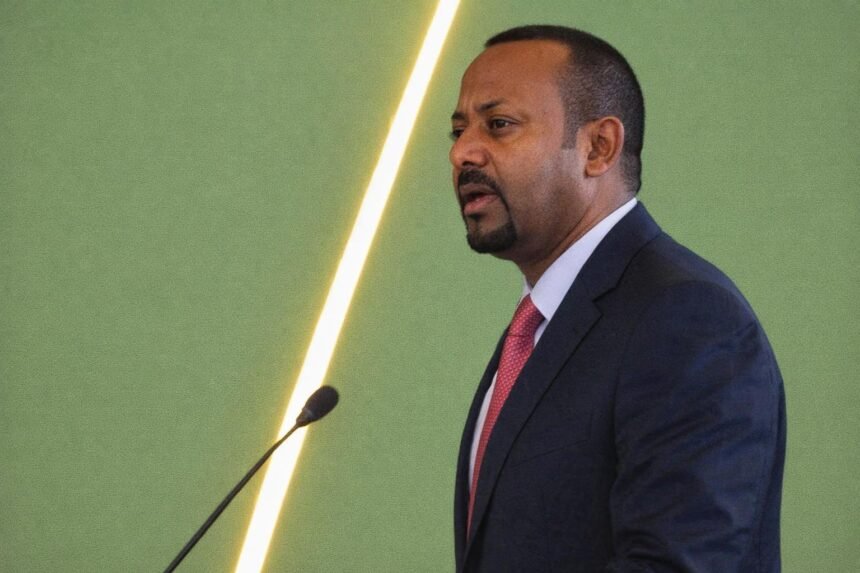
Beyond the Amhara claim, the relationship has been further strained by Ethiopia’s stated desire for access to the Red Sea. The report notes that Prime Minister Abiy Ahmed publicly framed sea access in 2023 as an “existential matter” for Ethiopia—language that can elevate negotiations into questions of sovereignty and survival.
Eritrea dismissed that framing. In an interview with state-run media earlier this week, Eritrean President Isaias Afwerki accused Abiy’s party of declaring war on Eritrea, while adding that Eritrea did not want war and that it knew how to defend the nation. The language reflects a hardening posture.
Calendar: Key dates shaping Ethiopia–Eritrea friction
Eritrea formally separated from Ethiopia in 1993, after a decades-long independence struggle, leaving Ethiopia without a coastline. A border war broke out five years later, causing mass casualties, before years of stalemate and hostility entrenched mutual suspicion.
In 2018, the two sides signed an historic declaration to normalise relations. Eritrean troops later fought in support of Ethiopia’s government during the 2020–22 war in Tigray. The conflict ended with a peace deal in November 2022, from which Eritrea was excluded, according to the report.
Actors: Police, parties and armed groups at the center
At the operational level, Ethiopian police are the institutional voice behind the seizure claim, reporting arrests and an ongoing investigation. Politically, the dispute has drawn in Ethiopia’s ruling Prosperity Party through Eritrea’s public rebuttal and allegations of ulterior motives.
On the Eritrean side, the Information Minister serves as the principal spokesperson rejecting the charge, while President Isaias Afwerki’s remarks to state media sharpen the tone at the strategic level. The Fano, described as an armed insurgent force in Amhara, remain central to Ethiopia’s internal security landscape.
Scenarios: De-escalation through dialogue or narrative spiral
One scenario is controlled de-escalation, in which Addis Ababa and Asmara compartmentalise the ammunition accusation and return to diplomatic messaging focused on dialogue. Abiy, as cited in the report, has said Ethiopia does not seek conflict with Eritrea and wants to handle Red Sea access through discussions.
Another scenario is a narrative spiral, where competing claims—smuggling allegations on one side and “false flag” accusations on the other—reduce room for compromise. In this environment, domestic security pressures in Ethiopia and strategic sensitivities in Eritrea could make even limited incidents politically costly to ignore.
Maps and charts (sources)
Map suggestion: Ethiopia–Eritrea border and Ethiopia’s landlocked geography since 1993, highlighting Amhara region and the Red Sea coastline of Eritrea (sources: the report’s geographic figures; official administrative maps where available). Chart suggestion: timeline of major bilateral milestones from 1993 to the November 2022 peace deal (source: the report). Photo suggestion: file images of border crossing points or official statements from Ethiopian police and Eritrean officials, captioned with date and attribution (source: the report).