Congo-Brazzaville’s foreign policy is increasingly framed around stability, economic partnerships and multilateral credibility. Its posture combines regional coordination in Central Africa, attention to Gulf of Guinea security, and an eco-diplomatic narrative anchored in forests and climate finance. The result is a style of influence that is more incremental than declaratory, but often effective.
- A Central African capital that negotiates by calibration
- Foreign policy priorities: security, investment, and credibility
- Regional diplomacy: CEMAC and Central Africa’s institutional chessboard
- Gulf of Guinea security: maritime cooperation as economic statecraft
- Energy diplomacy: partnerships, transition narratives, and deal optics
- Eco-diplomacy and the Congo Basin: forests as strategic capital
- Multilateral governance: positioning in the UN, AU and OIF
- The state, business intermediaries, and diplomatic ecosystems
- Diplomacy as a rolling agenda, not a single summit
- What to watch in Congo-Brazzaville’s influence playbook
- A discreet but durable statecraft
A Central African capital that negotiates by calibration
Brazzaville’s diplomatic reflexes are shaped by geography and interdependence: it sits at the hinge of the Congo Basin, near critical Atlantic maritime routes, and within the dense institutional ecosystem of Central Africa. In practice, this pushes Congolese diplomacy toward coalition-building rather than solitary positioning, and toward managing perceptions as carefully as managing dossiers.
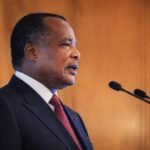
For many partners, Congo-Brazzaville reads as a continuity state. That continuity, associated with President Denis Sassou Nguesso’s long experience of regional affairs, offers predictability in a region where predictability is itself a currency. It also provides a platform for convening, discreet mediation, and transactional economic diplomacy without constant doctrinal reinvention.
Foreign policy priorities: security, investment, and credibility
At the core lies a three-part agenda. First, security cooperation, particularly where maritime risks, cross-border trafficking, and regional spillovers can affect economic corridors. Second, economic diplomacy aimed at attracting capital into energy, infrastructure and services. Third, multilateral credibility, where votes, statements and participation signal that Brazzaville is a dependable stakeholder in rule-based forums.
This architecture is not unusual. What distinguishes Congo-Brazzaville is the effort to keep these pillars mutually reinforcing. Security partnerships are presented as enabling investment. Climate and forest narratives are used to widen the circle of financiers. Multilateral engagement is deployed as reputational insurance for long-term economic projects that require political patience.
Regional diplomacy: CEMAC and Central Africa’s institutional chessboard
Within CEMAC and the broader Central African institutional landscape, Congo-Brazzaville tends to privilege stabilisation and steady coordination. In regional settings, Brazzaville’s leverage often comes less from headline announcements than from institutional memory and an ability to engage different political sensibilities without escalating rhetoric.
The region’s macroeconomic constraints, including monetary and fiscal coordination within CEMAC, make diplomacy inseparable from technical governance. For Congolese officials, influencing the tempo of regional discussions—on convergence, public finance, and banking stability—can matter as much as high-profile summits, because it shapes the business climate that investors ultimately perceive.
Gulf of Guinea security: maritime cooperation as economic statecraft
Gulf of Guinea security has become a practical theatre of influence. Maritime insecurity is not only a defence concern; it is an investment concern that touches shipping costs, insurance premiums, offshore operations and port competitiveness. Congo-Brazzaville’s interest is therefore to keep the Atlantic frontage readable and operational for energy exports and trade logistics.
The Congolese approach is typically cooperative: align national maritime capabilities with regional mechanisms, strengthen information-sharing, and project an image of seriousness. For external partners, this offers an entry point that is less politically charged than internal governance debates, and more directly linked to measurable deliverables.
Energy diplomacy: partnerships, transition narratives, and deal optics
Energy remains central to Congo-Brazzaville’s external economic relationships. Diplomacy here is about securing partners, technology and financing while managing the optics of transition. The state’s messaging often seeks to reconcile hydrocarbons’ fiscal role with a longer-term language of diversification and sustainability, which resonates in multilateral and European settings.
For investors, the key diplomatic signal is consistency: stable interlocution, predictable contract enforcement signals, and a willingness to engage on standards. For policymakers, the key is sequencing—ensuring that transition commitments do not undercut near-term revenues needed for public investment, while still opening doors to green finance and blended instruments.
Eco-diplomacy and the Congo Basin: forests as strategic capital
Congo-Brazzaville’s eco-diplomacy is structurally advantaged by the Congo Basin’s global importance. Forests and biodiversity increasingly function as strategic capital: they enable access to climate conversations where influence is not purely military or economic, and where African states can negotiate for finance, technology transfer and recognition of conservation burdens.
In this arena, Brazzaville’s aim is twofold: to position itself as a credible steward, and to convert that credibility into tangible resources. The challenge, familiar across forest countries, is bridging the gap between global pledges and disbursements. Diplomacy, therefore, becomes a continuous exercise in verification, narrative discipline and coalition-building.
Multilateral governance: positioning in the UN, AU and OIF
In multilateral venues, Congo-Brazzaville generally prioritises constructive participation and the cultivation of a reliable profile. The value of such a profile is cumulative: it can translate into support for candidatures, smoother access to technical assistance, and a stronger voice in negotiations where smaller states gain weight through coalitions.
The African Union’s peace and security architecture and UN processes offer additional space for calibrated influence. Here, Brazzaville’s diplomacy typically avoids maximalist postures, preferring language that keeps channels open. For many diplomats, that restraint is not passivity; it is a strategy to remain admissible to multiple partners at once.
The state, business intermediaries, and diplomatic ecosystems
Congo-Brazzaville’s external action is carried by a familiar triangle: the presidency and core ministries, economic agencies and sectoral operators, and a wider ecosystem of business intermediaries and diasporic networks. In practice, deal-making often depends on the quality of coordination between political intent and technical execution.
Foreign embassies and multilateral representatives in Brazzaville frequently assess not only the stated priorities, but also the state’s capacity to follow through across bureaucratic layers. This is where reputational capital matters: the ability to provide timely decisions, maintain coherent messaging, and protect agreements from administrative drift.
Diplomacy as a rolling agenda, not a single summit
Congo-Brazzaville’s diplomatic calendar is less about one defining annual summit than about a rolling sequence of ministerial meetings, technical committees and multilateral sessions. For practitioners, the leverage points often sit in the margins: preparatory meetings, communiqué drafting, and side-room negotiations where language is agreed before leaders arrive.
This rhythm rewards states that are organised and consistent. It also means that influence can be exercised through sustained presence rather than spectacular announcements. In Central Africa’s institutional culture, the state that returns to the table, again and again, can shape the eventual consensus more than the state that appears only for the photograph.
What to watch in Congo-Brazzaville’s influence playbook
One scenario is consolidation: Congo-Brazzaville deepens its profile as a stability and investment interlocutor, leveraging energy revenues while negotiating climate and forest finance more effectively. Another scenario is selective diversification: Brazzaville broadens partnerships beyond traditional counterparts, using multilateral credibility to attract a wider set of financiers.
A third scenario is institutional acceleration at the regional level, where CEMAC and adjacent mechanisms translate technical reforms into stronger investor confidence. Across scenarios, the common variable is execution capacity. In diplomacy, credibility is not declared; it is demonstrated in follow-up, delivery, and the ability to keep commitments legible to partners.
A discreet but durable statecraft
Congo-Brazzaville’s diplomacy seldom seeks to dominate headlines, yet it is designed to endure. Its strength lies in continuity, in a preference for negotiated increments, and in a capacity to speak several international languages at once: security, energy, climate, and multilateral rules.
For regional and international partners, the practical takeaway is that Brazzaville often works best through frameworks—CEMAC, Gulf of Guinea cooperation, UN and AU processes—where its steady engagement can compound into influence. In Central Africa, that kind of durability is a strategic asset.