Ce qu’il faut retenir
Benin and Niger have entered a fresh diplomatic standoff after Cotonou expelled two officials from Niamey’s embassy and Niger responded by declaring Benin’s chargé d’affaires persona non grata. The exchange, rooted in escalating mutual suspicion since the 2023 coup in Niamey, raises new questions about regional security and trade routes along the Benin-Niger corridor.
Contexte régional
The current chill cannot be divorced from the wider recalibration of Sahelian geopolitics following General Abdourahamane Tiani’s seizure of power in July 2023. ECOWAS sanctions, the closure of the Benin–Niger border, and the arrival of Russian advisers in Niamey have all altered the neighbourhood’s balance, leaving coastal states anxious about contagion.
Cotonou, led by President Patrice Talon, finds itself juggling domestic stability and the need to reassure partners that its territory remains a dependable launchpad for trade to Niger’s landlocked economy. Niamey, meanwhile, frames Benin as a proxy for foreign forces allegedly intent on reversing the coup, an accusation repeatedly denied by Beninese authorities.
Calendrier des tensions
In early January 2026, Benin quietly requested the departure of police officer Illia Boukari and civil servant Balkissa Ibrahim from the Nigerien mission. Sources in Cotonou say the step applied the principle of reciprocity, because Benin’s own embassy in Niamey deploys no security personnel of comparable rank.
Niger answered within days by expelling Benin’s interim head of mission, a diplomat already managing a downsized post since the ambassador was recalled in February 2025. A letter circulated among the Beninese diaspora hinted at a complete shutdown of consular services from 5 January, yet officials in Cotonou insist the embassy remains open.
Les acteurs et leurs calculs
Behind the formal notes verbales stand political constituencies with diverging agendas. In Niamey, hard-line officers seek to project sovereignty and deter any notion of external meddling. For them, every diplomatic move is scrutinised through the lens of regime survival and the narrative of post-colonial emancipation.
In Benin, opposition figures labelled as “nostalgic politicians” are accused by the Interior Ministry of courting foreign sympathisers after Cotonou foiled an alleged coup attempt in December. The government’s measured rhetoric suggests a wish to avoid escalation while signalling it will not tolerate perceived asymmetries in diplomatic privilege.
Security overtones
The expulsions carry security undertones. With Niger’s frontier still sealed, Beninese forces have reinforced patrols near Malanville, wary of arms trafficking and militant infiltration. Military cooperation that once included joint riverine drills is on hold, depriving both sides of early-warning mechanisms against jihadist incursions that have plagued neighbouring Burkina Faso.
Western partners observe the rift closely, as the Benin-Niger axis forms part of a corridor earmarked for EU-funded security assistance. Should diplomatic channels remain clogged, implementation of planned surveillance technology and capacity-building grants may stall, leaving a gap that non-state armed groups are adept at exploiting.
Scénarios possibles
One scenario foresees a gradual thaw brokered by ECOWAS mediators, who could leverage economic arguments: Niger’s oil exports via the new pipeline to the Beninese port of Sèmè require functioning customs cooperation. Quiet technical talks might therefore precede public rapprochement.
A bleaker outlook envisions protracted tit-for-tat measures that erode trust, complicate visa services, and dampen trade just as both economies face inflationary pressure. In that case, informal cross-border networks may fill the gap, undercutting state revenue and security oversight along the trans-Sahel corridor.
ECOWAS and Cross-Border Economics
Regional business leaders warn that continued diplomatic friction could delay corridor modernisation projects financed by the African Development Bank. Transporters already detour through Togo, adding costs that ripple across Benin’s cotton sector and Niger’s food supply chains, a dynamic ECOWAS is keen to reverse this quarter.
Looking for an Off-Ramp
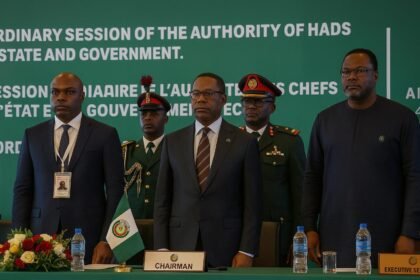
Seasoned diplomats in Abuja argue that symbolism counts: a photo-op handshake during an upcoming ECOWAS summit could halt the spiral at minimal political cost. Whether Niamey and Cotonou seize that opening will determine if West Africa’s newest diplomatic headache remains a storm in a teacup or hardens into lasting estrangement.