Ce qu’il faut retenir
Donald Trump’s appetite for strategic minerals has migrated from Angola’s Lobito Corridor to a lesser-known but equally transformative project on the Guinea-Liberia axis. Branded the Liberty Corridor, the future rail-port chain promises direct access to Simandou, holder of one of the world’s richest untapped iron ore seams.
Behind the diplomatic varnish, the corridor has quickly become a battleground. Two corporate heavyweights—Canada-backed Ivanhoe Atlantic and steel major ArcelorMittal—are advancing rival investment offers worth several billion dollars, each touting speed, scale and allied political support to capture the flow of Guinean ore toward Monrovia’s Atlantic coast.
Contexte
Washington signalled its renewed resource pragmatism by first endorsing the Lobito Corridor in Angola, a template for infrastructure-plus-diplomacy deals. The Liberty scheme now extends that logic north-west, knitting landlocked Guinean deposits to Liberian export gateways and answering U.S. calls for diversified iron supplies beyond Asia-Pacific routes.
Simandou’s magnetite and hematite grades make the mountain range a geological prize. Yet repeated delays—from ownership reshuffles to financing gaps—have kept the ore underground. By piggy-backing on Liberia’s shorter route to sea, the Liberty Corridor is billed as the missing logistical hinge capable of unlocking commercial production.
Regional observers note that the line discreetly bypasses older Guinean port plans. The recalibrated geography shifts customs revenue, employment and environmental oversight toward Liberia, injecting a new layer of cross-border bargaining into an already sensitive mining dossier.
Calendrier
Preliminary surveys were briskly commissioned after Trump associates flagged the corridor’s strategic value. Both Ivanhoe Atlantic and ArcelorMittal have floated construction timelines that converge around the latter half of the decade, contingent on concession clearances and sovereign guarantees from Conakry and Monrovia.
Ground-breaking ceremonies, tentatively pencilled for next year’s dry season, are poised to serve as geopolitical theatre. Officials in Washington hint at development-finance tools to de-risk the project, while Liberian authorities weigh domestic expectations of jobs and electrification spin-offs.
Analysts caution that each quarter of delay inflates capital costs. With Simandou’s ore price sensitivity, missed windows could tilt profitability projections and potentially reopen the field to third-party bidders or even renegotiations on haulage tariffs.
Acteurs
Ivanhoe Atlantic enters the fray armed with a track record of high-grade discoveries and a familiarity with Canadian export credit structures. Its pitch emphasises fast-tracked engineering and a modular rail design that can scale with ore volumes.
ArcelorMittal counters with integrated steelmaking expertise and an existing Liberian footprint. The multinational leans on established community relations and argues that its global supply chain can absorb Simandou output more seamlessly than a newcomer’s trading desk.
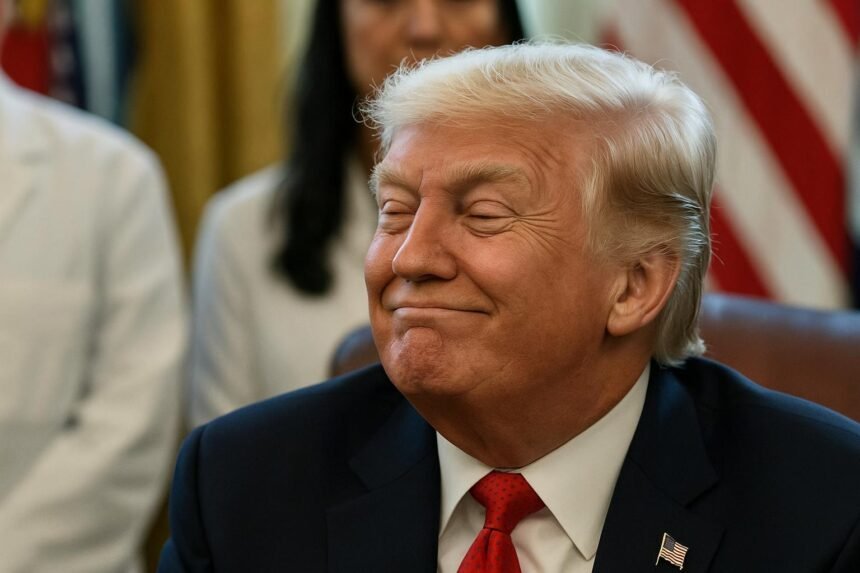
Hovering above both is Donald Trump’s political brand, recalibrated toward commodity security. While not officially in office, his imprimatur signals potential U.S. diplomatic heft. Observers suggest that a future administration sympathetic to the move could bundle military cooperation or trade concessions to entrench the partnership.
Scénarios
If Ivanhoe Atlantic secures the concession, the Liberty Corridor could emerge as a lean, miner-led artery prioritising export speed. Rapid first-ore shipment would strengthen Canada-U.S. alignment on strategic minerals and set a precedent for junior-major collaboration.
Should ArcelorMittal prevail, the corridor may integrate more processing stages inside Liberia, embedding value addition but extending construction phases. The steel group’s vertical model would likely prioritise long-term offtake stability over quick cash flow, dovetailing with its global furnace network.
A deadlock scenario, spurred by legal challenges or financing hesitancy, would freeze Simandou yet again. Such paralysis could invite new entrants or push Conakry toward alternate maritime outlets, diluting Liberia’s leverage and tempering Washington’s narrative of infrastructure-driven partnership.