Ce qu’il faut retenir
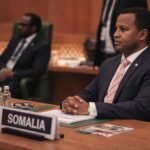
In January 2026, the Democratic Republic of Congo returns to the United Nations Security Council as a non-permanent member for the 2026-2027 term, securing 183 votes out of 187. Its seat coincides with Somalia’s rotating presidency.
Kinshasa hopes to keep the armed crisis in its eastern provinces high on the Council agenda, pressing for full execution of Resolution 2773 that calls for the withdrawal of M23 and Rwandan troops.
Diplomatic Context of 2026
The Security Council refreshes a third of its non-permanent seats each year. In 2026 Algeria, South Korea, Guyana, Sierra Leone and Slovenia exit, giving way to Bahrain, Latvia, Colombia, Liberia and the DRC. For Congo this is a third tenure after stints in the early 1980s and 1990s.
Foreign Minister Thérèse Wagner positions the mandate as a platform to “carry the voice of the DRC and of Africa,” underlining a continental solidarity narrative. Her messaging dovetails with longstanding calls for a fairer African representation in global governance.
Timeline of Kinshasa’s Campaign
The campaign crystallised in June 2025 inside the General Assembly, where diplomatic envoys amassed cross-regional endorsements that produced the near-unanimous 183-vote tally. According to presidential advisers, the lobbying combined bilateral outreach with coordinated African Union backing.
Observers in Kinshasa argue the momentum built on a perception that the country’s security dilemma deserved a formal megaphone, an idea that resonated amidst wider debates on conflict prevention financing.
Key Players at the Security Council
Kinshasa will sit alongside Liberia and Somalia, forming the so-called African three or “A3” caucus. In previous sessions, the A3 has acted as a swing bloc capable of bridging positions between permanent and elected members.
A senior Congolese official concedes that earlier reluctance within the bloc complicated efforts to obtain “strong action” on the eastern crisis. With its own seat, the government now intends to influence caucus talking points from within rather than plead from outside.
Regional Repercussions for the Great Lakes
The government frames the M23 insurgency as “an aggression orchestrated by Rwanda,” a description that shapes its diplomatic messaging. Ensuring sustained focus at Turtle Bay is judged essential to deter any neglect triggered by simultaneous emergencies in Venezuela or the Middle East.
Analysts such as Christian Moleka warn that absent continuous visibility, the Congolese file could “disappear overnight” from the Council’s priority list, given the institution’s finite bandwidth. Maintaining attention, they argue, is a sine qua non for peace-building programs envisaged under Resolution 2773.
Balancing Global Crises and Congolese Agenda
The 2026 docket already features maritime insecurity in the Red Sea, contested elections in Latin America and climate-linked displacement. Diplomats therefore expect stiff competition for airtime. Kinshasa’s strategy is to align its case with broader themes such as civilian protection and cross-border terrorism, themes that galvanise transregional coalitions.
Scenarios for Resolution 2773 Implementation
Optimists foresee the Council leveraging its renewed African composition to press harder for a sequenced withdrawal of foreign forces, paired with regional dialogue efforts led by the East African Community. A less favourable scenario envisages stalemate if great-power rivalries absorb diplomatic bandwidth, leaving the text unenforced.
Between those extremes lies a pragmatic path where incremental monitoring mechanisms keep Resolution 2773 alive while humanitarian corridors expand. Kinshasa’s seat cannot conjure miracles, but it offers an institutional microphone at a time when silence may prove costlier than continued advocacy.
Strategic Significance Beyond 2027
Looking beyond its mandate, Kinshasa views the seat as rehearsal for deeper reforms of the Council, where permanent membership remains elusive for Africa. By demonstrating constructive, coalition-building diplomacy over the next two years, the DRC hopes to strengthen the continental argument that a permanent African voice would enhance the body’s legitimacy and effectiveness.