Ce qu’il faut retenir
The African Development Fund (ADF) has secured US$11 billion from 43 bilateral and multilateral partners, the largest replenishment since the facility was created 50 years ago. Nineteen African states are now on the donor roster, while Arab financial institutions have stepped in with sizeable co-financing windows. A new mandate to tap capital markets should amplify the Fund’s catalytic reach.
- Ce qu’il faut retenir
- Historic $11bn Replenishment Sets New Bar
- African Contributions Signal Growing Fiscal Confidence
- Arab Financing Blocs Deepen South-South Links
- Market Borrowing Clause: A Structural Shift
- Energy, Food Security, Integration: Core Priorities
- Scenarios: Leveraging the Fund’s New Firepower
Historic $11bn Replenishment Sets New Bar
Replenishment of the ADF occurs on a predictable cycle, yet the thirteenth round marks a qualitative leap. Despite tightening global budgets and declining official development assistance, partners expanded their envelopes rather than retrenching. The headline number—US$11 billion—eclipses every previous cycle, underscoring continued confidence in the African Development Bank Group’s concessional window and its project pipeline.
African Contributions Signal Growing Fiscal Confidence
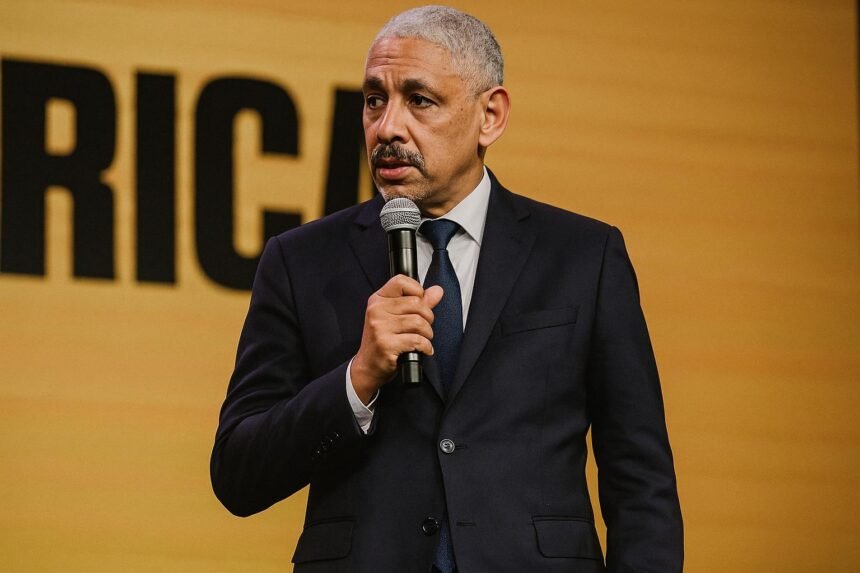
In the previous cycle only five African countries contributed to the pool. This time, nineteen have pledged more than US$180 million. “Africa is now co-investor in its own future,” noted ADB president Sidi Ould Tah, welcoming the shift from beneficiary to shareholder mind-set. The broadening base signals improving revenue mobilisation at the national level and a desire for greater ownership of development outcomes.
Arab Financing Blocs Deepen South-South Links
Arab partners, acting through the Arab Bank for Economic Development in Africa and the OPEC Fund for International Development, introduced innovative co-financing mechanisms that could channel up to US$2.8 billion alongside ADF resources. Their engagement reinforces a wider South-South dynamic, aligning Gulf liquidity with African infrastructure, agriculture and trade corridors without the conditionalities often attached to traditional aid.
Market Borrowing Clause: A Structural Shift
Beyond grant and loan pledges, shareholders have authorised the ADF to access capital markets directly. The new clause enables the Fund to leverage its balance sheet, absorb project risk and crowd in private investors at scale. By blending concessional capital with commercial proceeds, the institution aims to stretch every donor dollar and accelerate delivery on nationally determined development agendas.
Energy, Food Security, Integration: Core Priorities
Energy expansion, food-system resilience and regional integration remain the Fund’s north stars. Affordable power underpins industrialisation, while climate-smart agriculture buffers shocks that have pushed millions into precarity. Cross-border infrastructure—ports, roads, fibre and regulatory harmonisation—will lower transaction costs and knit economies together. Each dollar committed is expected to catalyse multiple dollars of domestic and foreign investment in these sectors.
Scenarios: Leveraging the Fund’s New Firepower
If the borrowing mandate gains traction, the ADF could multiply its concessional portfolio several-fold over the coming decade. Combined with the fresh US$11 billion, that leverage may soften perceived risk, quicken deal flow and improve project bankability across energy and agribusiness value chains. Conversely, sluggish uptake on capital markets would leave the Fund relying mainly on donor cycles, limiting its ability to scale transformative programmes.