Key Takeaways
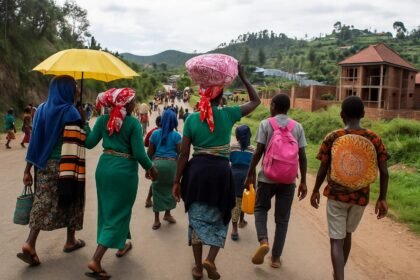
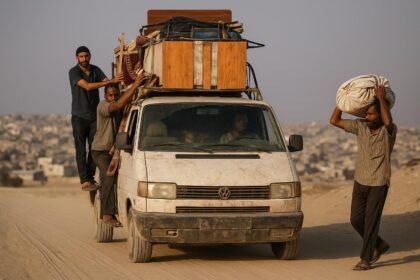
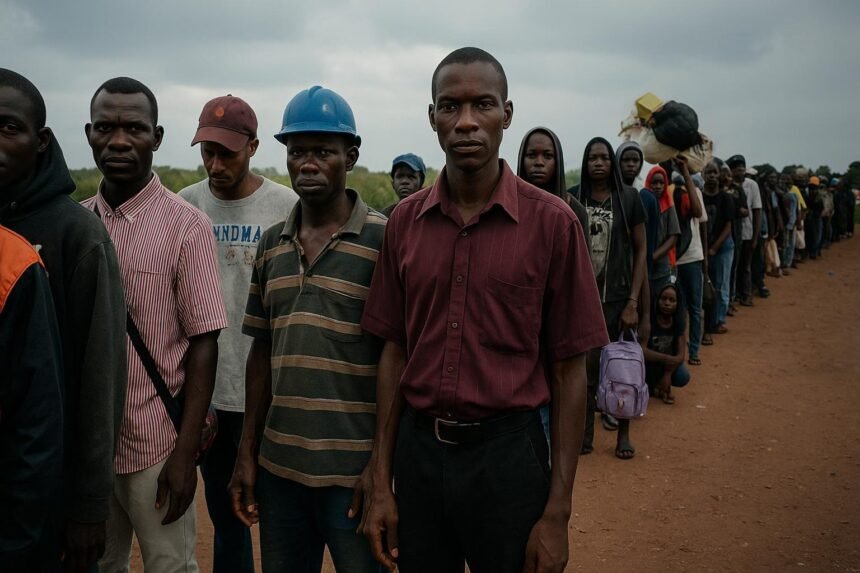
On 14 December, after three days trapped at the Gatumba frontier, more than five hundred Burundian nationals finally crossed out of Uvira, the eastern Congolese town seized by the Alliance Forces for Change/M23 on 10 December. Their trek, negotiated between the rebels and Bujumbura, highlights the fragility of civilian mobility in the Great Lakes corridor.
Context of Uvira’s Sudden Shift
Uvira, a bustling lakeside hub opposite Burundi, fell to AFC/M23 within hours, displacing traders, domestic workers and porters who had made the Congolese city their economic base. The takeover instantly altered everyday calculus: salaries stopped, security guards disappeared, and the once-porous border became a lifeline that could no longer be taken for granted.
“The guards of the house where I worked fled and my employers abandoned me,” recalled one exhausted woman upon arrival in Burundi. Left without protection or pay, she waited in the no-man’s-land alongside hundreds of compatriots, their belongings packed into plastic bags, their faces etched with the fatigue of uncertain nights.
Timeline of the Crossing
From 11 to 13 December, queues stretched for hundreds of metres as Burundians petitioned both sides of the frontier for authorisation. Compared with the usual minutes-long procedure, each passport was now scrutinised for hours while the rebels and Burundian officials exchanged written guarantees that the passage would not be exploited for military infiltration.
“We are not fleeing; we are returning home until we know whether we can come back,” explained a market vendor from Nyamyanda district. Her words capture a cross-border workforce that sees migration as circular, not definitive. Yet the pause in circulation threatens livelihoods in two cities whose daily markets are intricately intertwined.
Actors and Motives
The AFC/M23 frames the evacuation as a humanitarian gesture, insisting that its side of the Ruzizi plain remains open. Bujumbura, allied with the Congolese national army, has been less sanguine, seeking assurances that rebel combatants would not blend into civilian columns. In the fog of war, each stamp at the border carried geopolitical weight.
FARDC commanders welcomed Burundi’s caution, mindful that the same corridor has channelled armed groups in previous offensives. Yet behind the security rhetoric lies a diplomatic tightrope: both governments need the customs revenue and social cohesion generated by this micro-region, even as they pursue divergent military calculations against the M23 resurgence.
Mobility at a Standstill
Ironically, while Burundians exited Uvira, several dozen Congolese citizens attempting to head the opposite way remained stranded on the Burundian side. AFC/M23 claimed innocence, blaming the closure on Burundian authorities. The result was a rare moment when trade-dependent Congolese smallholders tasted the frustration usually reserved for migrant labourers.
With trucks immobilised and pedestrian footbridges deserted, cross-border commerce slowed to a whisper. Tomato prices in Uvira reportedly spiked, while Burundian transporters lost their daily commissions. Although the numbers stranded are modest, the episode illustrates how swiftly a local frontline can reverberate through supply chains stretching to Bujumbura’s markets.
Scenarios for Regional Stability
Three broad scenarios now loom. A rapid reopening, should security talks progress, would resurrect normal migration patterns within weeks. A protracted closure risks entrenching new smuggling routes that bypass official checkpoints. The most disruptive outcome— renewed hostilities around Uvira —would not only freeze mobility but also invite a humanitarian spill-over toward Lake Tanganyika.
For now, the safe return of over 500 Burundians offers a thin silver lining in a volatile theatre. It demonstrates that, even amid contested authority, negotiated corridors can work. Whether that model will hold when larger population movements come into play will test the diplomatic dexterity of capitals along the Great Lakes.