Ce qu’il faut retenir
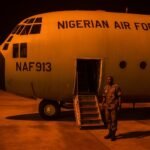
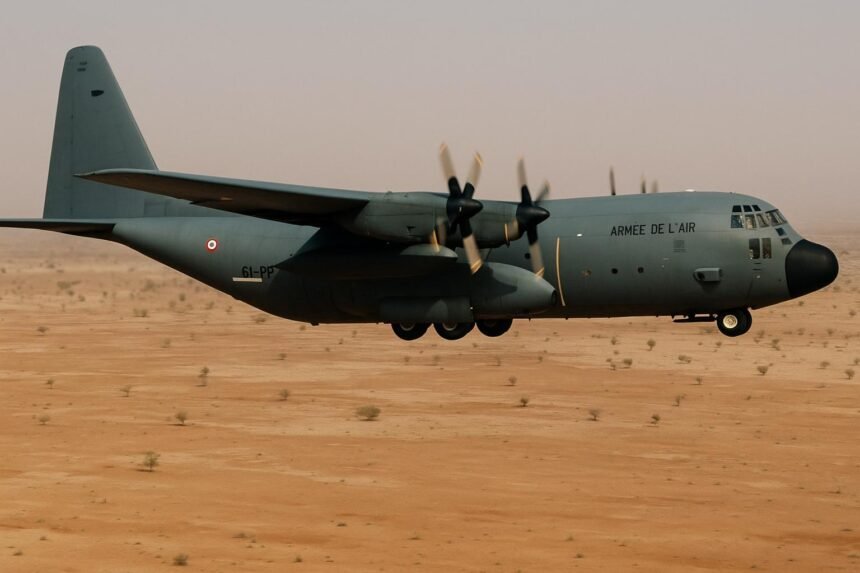
Friday’s precautionary landing of a Nigerian C-130 in Bobo-Dioulasso has reignited debate on who polices the Sahel skies. The Alliance of Sahel States, grouping the juntas of Mali, Burkina Faso and Niger, brands the incident a hostile violation and elevates its air-defence readiness, while Abuja stresses a routine technical glitch resolved “in accordance with international protocols”.
- Ce qu’il faut retenir
- Contexte
- Calendrier
- Acteurs
- Sahel airspace sovereignty tested
- Regional security chessboard after Benin coup scare
- Nigeria’s crisis diplomacy and communication strategy
- AES alert posture and internal cohesion
- Implications for CEMAC and Gulf of Guinea partners
- Scenarios for de-escalation or escalation
- Historic echoes
- The next diplomatic test
Contexte
Created in September, the AES emerged after successive coups and an acrimonious split with the Economic Community of West African States. The trio’s strategy is to harden sovereignty narratives at home, recalibrate security partnerships and court alternative allies, notably Russia. The December air incident fits neatly into that playbook, granting the confederation another rallying cry.
Calendrier
On 7 December, Nigerian air assets struck Cotonou to help Benin foil a reported coup attempt, underlining Abuja’s assertive regional posture. Two days later, the Lagos-to-Portugal flight declared a fault and diverted to western Burkina Faso, landing shortly before dusk. Within hours, AES television anchors read a stinging communiqué, accusing Nigeria of aggression and mobilising batteries.
Acteurs
Nigeria, still the sub-region’s demographic and economic heavyweight, balances firmness with conciliation. Its air force rapidly circulated photos of crew members smiling beside Burkinabe officers and insisted permission would have been sought if time had allowed. In contrast, AES spokespersons portrayed the episode as proof that ECOWAS neighbours disregard the bloc’s newly declared air exclusion zone.
Sahel airspace sovereignty tested
African airspace law rests on overlapping continental, regional and bilateral accords that rarely anticipate the operational tempo of today’s insurgency wars. AES members, short on radar coverage and early-warning infrastructure, have quietly relied on French and American data even while demanding their departure. By threatening to shoot down unauthorised craft, they assume heavy technical, political and legal risk.
Regional security chessboard after Benin coup scare
Abuja’s rapid assistance to Cotonou shows how security coalitions now form ad hoc, bypassing formal ECOWAS mechanisms hamstrung by sanctions disputes. For Nigeria, helping a civilian government next door bolsters credibility after last year’s hesitation over Niger. For AES, the optics of Nigerian aircraft bombing a coastal city strengthen claims of encirclement by hostile democracies.
Nigeria’s crisis diplomacy and communication strategy
Since President Bola Tinubu assumed the rotating ECOWAS chair, Abuja has experimented with muscular diplomacy paired with swift narrative management on social media. The air force’s transparent timeline, circulated in English and French, sought to pre-empt disinformation campaigns that previously inflamed opinion during the Niger blockade. Early damage control may explain why AES militias did not detain the crew.
AES alert posture and internal cohesion
Ordering maximum alert allows the juntas to showcase military preparedness to domestic audiences grappling with jihadist violence and economic strain. Yet coordination challenges persist; Bamako, Niamey and Ouagadougou operate incompatible Russian, Turkish and Chinese defence systems. Experts privately question whether the confederation could track, let alone engage, a high-altitude jet without external technical assistance.
Implications for CEMAC and Gulf of Guinea partners
In Douala, Libreville and Brazzaville, officials watch the standoff closely. Central African militaries rely on Nigerian air corridors for peacekeeping deployments and medical evacuations. Any prolonged AES flight ban would force costly detours through Chad or the Atlantic, complicating anti-piracy patrols in the Gulf of Guinea. Diplomats discreetly lobby Abuja and Ouagadougou to avoid mutually damaging tit-for-tat measures.
Scenarios for de-escalation or escalation
One pathway foresees swift technical consultations leading to a flight clearance protocol that saves face for both camps. A second, darker scenario envisages AES radars lighting up the next foreign aircraft, heightening the risk of miscalculation and insurance premiums. Regional analysts note that the humanitarian air bridge managed by the UN could become collateral damage if dialogue stalls.
Historic echoes
Veteran observers recall that airspace incidents have preceded major diplomatic realignments in West Africa. In 2004, a Gambian fighter interception of a Senegalese transport precipitated months of shuttle mediation. The current friction unfolds amid unprecedented contestation of colonial-era borders and flight information regions, an issue the African Union had hoped to settle under its Single African Air Transport Market.
The next diplomatic test
As delegations prepare for the next ECOWAS summit, seasoned diplomats suggest expanding the agenda to include a Sahel air governance compact with clear distress-landing procedures. Such a mechanism would spare pilots the impossible choice between technical odds and geopolitical sensitivities, while reinforcing the principle that African skies, like its seas, remain a collective good rather than a battlefield.