Ce qu’il faut retenir
The arrest of the Ebony Shine off Douala jolted relations between Cameroon and Equatorial Guinea. Teodoro Nguema Obiang Mangue’s forty-eight-hour mission to Yaoundé produced a confidential settlement and shelved a potentially costly confrontation. Central Africa’s fragile integration architecture, already strained by security and fiscal pressures, gained a rare diplomatic success.
- Ce qu’il faut retenir
- Ebony Shine seizure as flashpoint
- Teodorín’s swift flight to Yaoundé
- Negotiating the Fotso dossier
- Silent diplomacy over megaphone statements
- Regional calculus for CEMAC
- Security ripple across the Gulf of Guinea
- Implications for Congo-Brazzaville
- Lessons in elite bargaining
- Next steps worth watching
- Calendar of key milestones
- Context and broader significance
Ebony Shine seizure as flashpoint
On 15 November Cameroonian customs officers detained the luxury yacht Ebony Shine, reportedly linked to the Equatoguinean vice-president. Local media hinted at irregular flagging and unpaid dues, while Malabo denounced the move as a political slight. The episode revived memories of earlier maritime frictions along the busy Gulf of Guinea shipping lanes.
Teodorín’s swift flight to Yaoundé
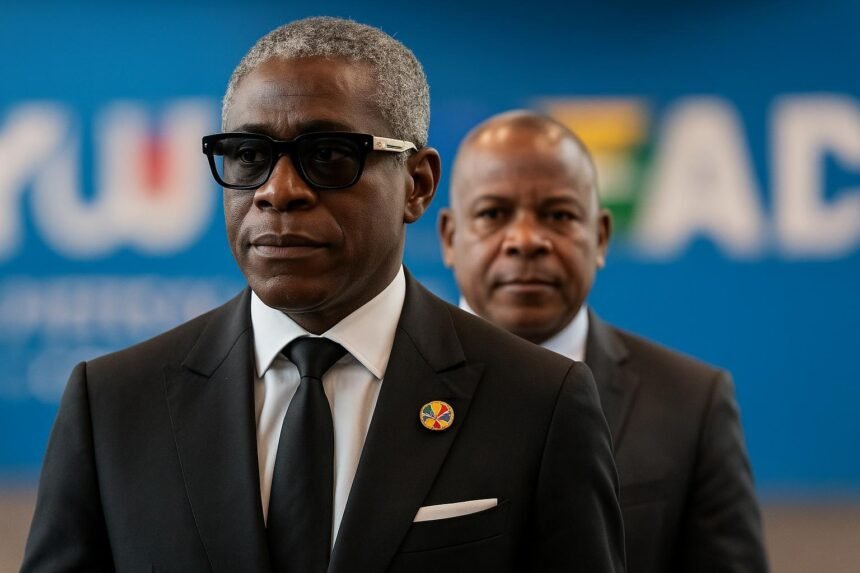
Eschewing protocol, Teodorín boarded an Air Force jet on 18 November and landed at Yaoundé-Nsimalen with a tight entourage. Official communiqués emphasised “fraternal consultation”, yet sources close to the presidency confirmed that the primary goal was to recover the vessel and prevent escalation (sources close to the presidency).
Negotiating the Fotso dossier
Beyond the yacht, talks circled around the sensitive case of Yves Michel Fotso, the jailed former head of Cameroon Airlines who holds business interests in Bata. By linking the two files, emissaries crafted a face-saving package: Cameroonian authorities agreed to release the yacht, while Equatorial Guinea pledged renewed cooperation on outstanding legal assistance requests.
Silent diplomacy over megaphone statements
Neither capital issued triumphalist statements. Cameroon’s foreign ministry limited itself to noting “mutual understanding”. Malabo circulated images of Teodorín smiling beside President Paul Biya but avoided specifics. This calibrated minimalism underscored a shared interest in preserving room for manoeuvre and shielding domestic audiences from the optics of concession.
Regional calculus for CEMAC
The six-member CEMAC bloc depends on relatively frictionless borders to advance its delayed free-movement agenda. A prolonged quarrel between its second- and third-largest hydrocarbon producers could have stalled customs union reforms and weakened collective bargaining in forthcoming talks with the World Bank and the IMF on post-COVID recovery financing.
Security ripple across the Gulf of Guinea
Maritime piracy incidents have inched westward from the Niger Delta toward Cameroon’s coast. A bruising diplomatic row would have complicated coordination among coastal navies under the Yaoundé Architecture for Maritime Security. By restoring trust, the agreement helps maintain joint patrols that protect 20 % of sub-Saharan Africa’s oil shipments.
Implications for Congo-Brazzaville
Brazzaville, which currently seeks to position itself as a quiet mediator in Central African affairs, observed proceedings with interest. The episode reinforces the value of rapid, high-level shuttle diplomacy—an approach President Denis Sassou Nguesso has applied in the Great Lakes and may emulate should disputes arise over the Cabinda corridor or trans-border trade with Gabon.
Lessons in elite bargaining
The Yaoundé meeting illustrated how personalised networks often outperform formal mechanisms in Central Africa. By leveraging personal rapport between long-standing heads of state, negotiators cut through bureaucratic inertia. Critics argue that such opacity hampers institutional maturation, yet proponents insist it offers a pragmatic antidote to crisis paralysis.
Next steps worth watching
Attention now shifts to implementation. The Ebony Shine is expected to depart Douala under Equatoguinean colours once final paperwork clears. Cameroon’s justice ministry will dispatch a technical team to Malabo regarding the Fotso file. Any delay could reignite tensions, but for now the political mood across the Mitemele river is cautiously upbeat.
Calendar of key milestones
Late November: joint commission reviews maritime protocols in Bata. December: defence ministers discuss patrol coordination in Libreville. First quarter 2025: CEMAC heads of state summit in Brazzaville, where President Sassou Nguesso is likely to highlight the Yaoundé compromise as evidence of the region’s capacity for self-managed conflict resolution.
Context and broader significance
Central Africa rarely benefits from the spotlight when diplomatic crises are averted. Yet the discreet success of Teodorín’s mission offers a glimpse of incremental progress in a region often portrayed as perennially volatile. For external partners assessing risk, the incident signals that behind the scenes, leaders can still privilege negotiation over brinkmanship.