Ce qu’il faut retenir
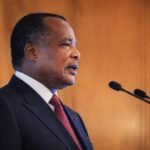
A surge of misleading narratives about Congo-Brazzaville’s economic outlook and forest-carbon policy has prompted a calibrated diplomatic response from President Denis Sassou Nguesso’s advisers. The government is combining digital forensics, multilateral advocacy and cultural outreach to limit reputational damage, safeguard investment inflows and keep regional security dialogues on track.
- Ce qu’il faut retenir
- Disinformation as Strategic Risk
- Brazzaville’s Multi-Layered Response
- Coordinating within CEMAC and the AU
- Leveraging Soft-Power Assets
- Economic Diplomacy in the Digital Age
- Judicial Safeguards and Sovereign Equality
- US and EU Channels Remain Open
- Carbon Credits and Climate Narratives
- Calendar
- Key Actors
- Scenarios to Watch
Disinformation as Strategic Risk
Foreign-policy planners in Brazzaville now rank hostile information operations alongside piracy in the Gulf of Guinea and fiscal volatility. Officials note that doctored satellite images and fabricated debt statistics have circulated on fringe websites before migrating to mainstream outlets, influencing perceptions of the country’s creditworthiness and its role in forest conservation financing.
Brazzaville’s Multi-Layered Response
The presidency has tasked the National Agency for the Security of Information Systems with real-time monitoring of viral content while the Ministry of Foreign Affairs issues rapid rebuttals through its new English-language portal. Legal teams are preparing civil suits against repeat foreign offenders under Congo’s 2021 law on the digital economy, which criminalises the deliberate spread of harmful falsehoods.
Coordinating within CEMAC and the AU
Congo is pushing for a shared early-warning mechanism on disinformation inside CEMAC, inspired by the AU’s Continental Early Warning System for security threats. A pilot cell, hosted in Brazzaville, will pool data from telecom regulators in Cameroon and Gabon to map narrative spikes in real time, officials confirmed after the July CEMAC Council of Ministers.
Leveraging Soft-Power Assets
Beyond defensive tools, Brazzaville is highlighting cultural diplomacy to project a positive national story. The Pan-African Music Festival, scheduled for December, will feature digital-media labs for influencers from 15 countries, signalling a pivot toward proactive storytelling. The city-to-city programme pairs Brazzaville with Lyon and Kigali on French-language podcast production that showcases Congo’s creative industries.
Economic Diplomacy in the Digital Age
Finance ministry emissaries have quietly briefed credit-ratings agencies to pre-empt distorted narratives about debt sustainability ahead of a planned eurobond tap next year. Parallel talks with the World Bank explore an insurance facility shielding infrastructure projects from reputational shocks that raise borrowing costs. Officials insist that transparent data releases are the best vaccine against market-moving rumours.
Judicial Safeguards and Sovereign Equality
Echoing President Cyril Ramaphosa’s recent rebuke of foreign disinformation campaigns, Congo’s leaders stress that an independent judiciary underpins their response. The Supreme Court affirmed last April that online defamation cases against foreign entities can proceed under Congolese jurisdiction when national interests are at stake, reinforcing the message that digital space is not a legal void.
US and EU Channels Remain Open
Despite occasional friction over rainforest governance metrics, Brazzaville maintains a pragmatic dialogue with Washington and Brussels. Diplomatic sources say the US embassy amplified government clarifications on logging concessions three times this year, while the EU Delegation co-financed media literacy workshops for local journalists, signalling that major partners prefer engagement over public confrontation.
Carbon Credits and Climate Narratives
As Congo eyes a leading role in global carbon markets, control of the storytelling around its 23 million-hectare peatlands becomes critical. A new memorandum with the Republic of Korea includes joint production of satellite-verified videos to document emission-reduction projects, aiming to reassure investors wary of green-washing allegations.
Calendar
October 25: launch of the regional disinformation early-warning pilot in Brazzaville. December 2-9: Pan-African Music Festival with digital-media labs. February 2025: presentation of Congo’s first national report on information integrity at the AU summit in Addis Ababa. April 2025: potential eurobond issuance dependent on market conditions and risk-perception indexes.
Key Actors
Thierry Moungalla, Minister of Communication, leads the rapid-response unit. Léon Juste Ibombo, Minister for the Digital Economy, oversees the legal framework. In CEMAC, Secretary-General Baltasar Engonga Edjo spearheads regional coordination. Civil society input comes from the Congolese Observatory of Digital Rights, which audits official counter-narratives for consistency with freedom-of-expression commitments.
Scenarios to Watch
If the regional early-warning cell proves effective, Brazzaville could lobby the UN Peace and Security Council for a continental protocol on cyber-mediated threats, elevating Congo’s diplomatic profile. Conversely, a surge of deep-fake videos during the 2026 legislative cycle would test the resilience of current measures and potentially redirect resources away from economic diversification priorities.