Ce qu’il faut retenir
A dawn communiqué from Carthage Palace confirmed that President Kaïs Saïed had summoned European Union ambassador Giuseppe Perrone, citing a breach of “diplomatic working rules”. The rebuke followed Perrone’s meeting with trade-union powerhouse UGTT, whose relations with the executive have been frozen for months. Brussels countered that engaging civil society is standard diplomacy.
- Ce qu’il faut retenir
- Diplomatic protocol under strain
- Civil society caught in the crossfire
- European Parliament spotlight
- Brussels’ calibrated response
- UGTT’s strategic silence
- Reading Saïed’s signalling
- Legal backdrop drives sensitivities
- Historical echoes of protocol disputes
- Scenario watch
- Actors and interests
- What next for EU–Tunisia relations?
Diplomatic protocol under strain
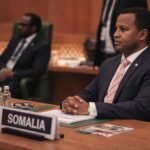
In summoning the envoy, the presidency opted for maximum visibility: an official photo in the gilded reception room, a clipped statement, and no room for ambiguity. Tunis framed the episode as a defence of sovereignty, insisting that envoys must coordinate sensitive contacts. The move signals Saïed’s desire to police foreign access to domestic actors now deemed oppositional.
Civil society caught in the crossfire
The UGTT’s secretary-general, Noureddine Taboubi, has not met government representatives since the breakdown of the national dialogue. Yet international partners continue to view the union as a stabilising force, remembering its role in the 2015 Nobel-prize-winning quartet. Perrone’s outreach therefore followed precedent, but the political mood has shifted, turning routine engagement into controversy.
European Parliament spotlight
Timing sharpened the incident. On 27 November, Strasbourg is slated to debate the detention of lawyer and media commentator Sonia Dahmani, jailed since May 2024 for remarks critical of the authorities. Saïed’s reprimand of the EU ambassador one day earlier sends a pre-emptive signal: external lectures on rights will be met with displays of firmness at home.
Brussels’ calibrated response
EU foreign-affairs spokesman Anouar El Anouni stressed that diplomats customarily speak with “a range of interlocutors” who enhance bilateral cooperation. The choice of words—technical, non-confrontational—suggests Brussels wants to dial down escalation while defending diplomatic space. No recall of the ambassador is envisaged; instead, officials will watch whether Tunis imposes new constraints on meetings.
UGTT’s strategic silence
While the presidency publicised the summons, UGTT limited itself to a brief note stating that Taboubi had also hosted the bar association’s bâtonnier and the head of the human-rights league. The union apparently prefers not to inflame matters, mindful that overt confrontation could jeopardise labour negotiations and its international partnerships forged over decades of social mediation.
Reading Saïed’s signalling
Observers see a domestic angle. By chastising a senior EU diplomat, Saïed reassures supporters who view foreign comments on Tunisia’s politics as intrusive. The episode also diverts attention from the economy’s headwinds and the stalled talks with the International Monetary Fund, shifting public debate toward questions of national dignity and external respect.
Legal backdrop drives sensitivities
Sonia Dahmani’s four-year-plus prison term has become a rallying issue for rights groups, who deem her treatment arbitrary. The European Parliament debate will rekindle scrutiny of Tunisia’s judicial reforms and speech offences. Tunisian officials may fear that meetings like Perrone-Taboubi amplify external narratives of repression, hence the stern reminder of acceptable conduct.
Historical echoes of protocol disputes
Tunisia has experienced earlier protocol spats, notably in 2012 when a French envoy’s remarks on democratization drew governmental ire. Each time, the government’s calculus balanced foreign-policy imperatives against domestic optics. The current incident fits that pattern but carries added weight because EU macro-financial support remains significant for budget stability.
Scenario watch
If Carthage imposes tighter accreditation procedures, European missions may respond with collective démarches, yet both sides have incentives to preserve working channels. A more conciliatory path could see joint statements clarifying meeting protocols, allowing engagement with civil society to resume under tacit guidelines. Escalation, while possible, risks derailing cooperation on migration and investment.
Actors and interests
Key players include President Saïed, whose assertive constitutional reading centralises authority; Ambassador Perrone, tasked with defending EU norms while safeguarding partnership projects; and the UGTT, still Tunisia’s largest organised constituency beyond the state. Their interactions will set the tone for wider civil-society access and, by extension, for Tunisia’s international image in a pivotal year.
What next for EU–Tunisia relations?
Both Brussels and Tunis know that pragmatic imperatives—trade, energy, border control—cannot be sidelined indefinitely. The immediate test will be whether future envoy meetings proceed unannounced or under presidential monitoring. Beyond protocol, the deeper question is whether Tunisia can rebuild an inclusive dialogue at home without converting every diplomatic courtesy call into a test of defiance.