Ce qu’il faut retenir
Côte d’Ivoire, already the world’s top producer of raw cashew nuts, is racing to transform at least half of its harvest at home by 2030. Backed by a €20 million European Union facility, thirty local processors are upgrading equipment, skills and finance access, signalling a wider shift toward value-adding trade between Africa and Europe.
Strategic Value Addition for Côte d’Ivoire
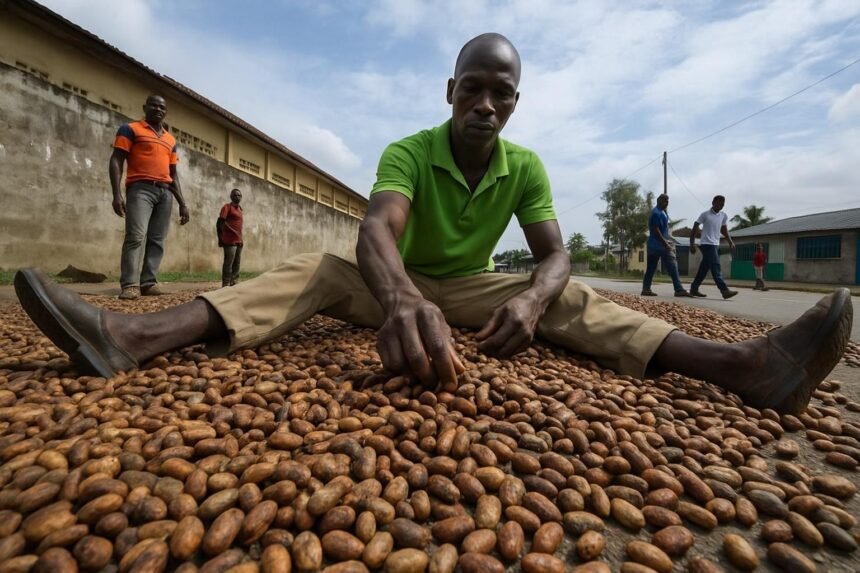
Raw cashew exports once left only slim margins in Abidjan while Asian processors reaped the bulk of profits. By embedding shelling, peeling and packaging in Ivorian industrial zones, policymakers aim to capture foreign exchange, create skilled jobs and anchor downstream industries such as confectionery and cosmetics.
The Ministry of Agriculture estimates that each additional percentage point of domestic processing secures roughly 1 500 new jobs. Private investors confirm the multiplier effect: conveyor manufacturers, carton suppliers and port operators all feel the pulse of a sector that harvested 1.2 million tonnes last season.
Context: AU-EU Summit Sets the Tone
The seventh African Union–European Union summit in Luanda opened with renewed pledges for “mutual prosperity through local industrialisation”. Brussels remains Africa’s largest trading partner and investor, yet officials concede that past engagement focused too narrowly on raw commodities. Cashew, a crop once shuttled through Asian hubs before reaching European snack shelves, illustrates the paradigm shift.
Diplomats in Luanda referenced Côte d’Ivoire as a “living laboratory” for the Global Gateway, the EU’s €300 billion connectivity strategy. Senior advisers argue that supporting factories closer to farms strengthens supply security for European importers while delivering tangible dividends to African producers.
Timeline: Four Years of Targeted Funding
Launched in 2020, the EU programme channels grants, credit guarantees and technical assistance to processors meeting rigorous traceability standards. In its first phase, beneficiary plants raised average kernel recovery rates from 23 % to 28 %, a gain that directly boosts revenue per tonne.
Carbon audits released this year show an estimated 40 % drop in emissions per kilogram of kernels shipped to Europe, largely because containers now sail directly from Abidjan rather than via Asian transits. Freight savings, meanwhile, cushion firms against volatile ocean rates.
Key Actors Driving the Transformation
Olam Food Ingredients, operating two large plants in Bouaké and Dimbokro, serves as anchor off-taker for some 120 000 smallholders. “Thanks to this project we are able to train growers in good agricultural practices, which boosts yields and traceability,” observes Alpha Dagnoko, sourcing manager at the firm (Alpha Dagnoko).
For the European side, Martina Borovac, Deputy Head of the EU Delegation in Abidjan, is unequivocal: “What interests us is to add value here so that raw nuts are no longer exported unprocessed” (Martina Borovac). Local banks such as NSIA and Ecobank complement EU guarantees with working-capital lines denominated in CFA francs, mitigating currency risk for processors.
Possible Scenarios for the Next Decade
If the 50 % processing target is met, Côte d’Ivoire could supply nearly 600 000 tonnes of ready-to-eat kernels annually, rivalling Vietnam’s current output. Analysts foresee knock-on benefits: a domestic shell-to-oil industry worth €200 million and new research into cashew apple bio-fuels.
Risks persist. Climate variability threatens flowering cycles, and global snack demand can wobble with consumer trends. Yet the alignment of government incentives, EU finance and private ingenuity offers a cautiously optimistic roadmap. Should the model hold, cashew diplomacy may soon inspire similar ventures in cocoa, rubber and palm, reshaping Euro-African trade norms.