Key takeaways
Sudan’s interim authorities are urging Washington to curb alleged Emirati support for the Rapid Support Forces (RSF) after handing over 21 USB drives of evidence to U.S. diplomats. While U.S. Secretary of State Marco Rubio demands an arms embargo on the militia, Khartoum warns that any mediation ignoring its roadmap and the battle for El-Fasher is doomed.
Diplomatic alarm in Washington
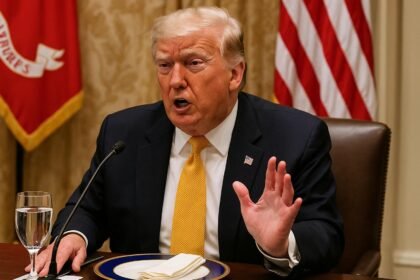
Speaking in Washington on 12 November, Secretary Rubio described the humanitarian situation in Sudan as “horrific” and underlined that the “fundamental problem is that the RSF never honours its commitments”. His call for an immediate halt to weapons deliveries broadened bipartisan concern on Capitol Hill but conspicuously stopped short of naming the United Arab Emirates.
Rights groups and UN experts have repeatedly linked Abu Dhabi to the RSF’s supply chain, but the Emirati monarchy remains an important security and energy partner for the United States. The diplomatic calculus explains, insiders say, Rubio’s reluctance to jeopardise broader Gulf cooperation even as pressure intensifies to identify sponsors of Sudan’s devastation.
Khartoum’s evidence dossier
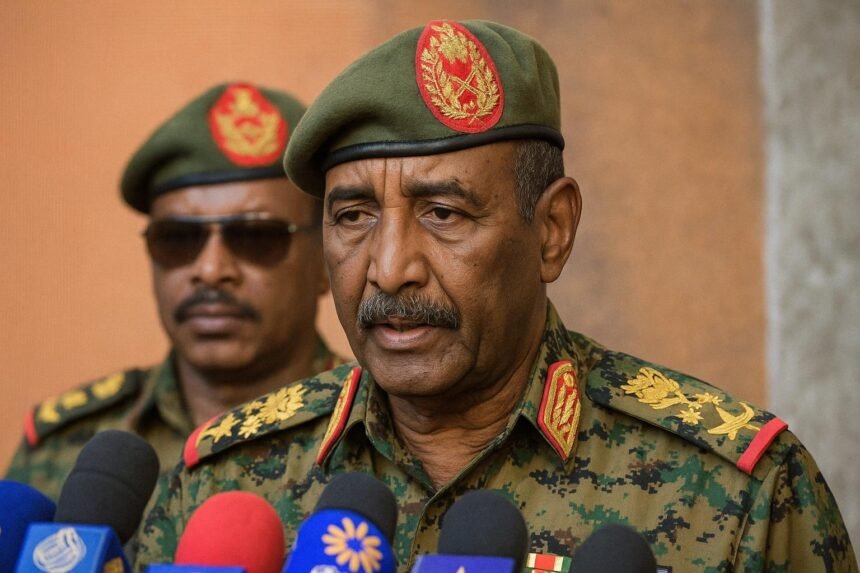
General Abdel Fattah al-Burhan, chairing Sudan’s Sovereign Council and commander of the national army, disclosed that Khartoum had earlier requested Washington to convene a confidential meeting with Sheikh Shakhbout bin Nahyan, the Emirati minister of state responsible for intelligence affairs. During that session Sudan’s delegation presented 21 USB sticks that allegedly track arms flights, bank transfers and field communications.
According to Burhan, the files were handed in the presence of U.S. Special Envoy for Africa, Masaad Boulos. The Emirati representative neither refuted nor confirmed the accusations and reportedly walked out in silence. Khartoum interprets that reaction as tacit acknowledgement and now presses Washington to translate the evidence into concrete diplomatic and economic deterrents.
Emirati stance faces compound pressure
Abu Dhabi’s official line denies military involvement and frames its engagement as humanitarian. Yet analysts note the RSF’s recent momentum in resource-rich Kordofan coincides with a reported uptick in drone and ammunition supplies traced back to Gulf logistics hubs. Mounting documentation could complicate the UAE’s efforts to portray itself as a neutral broker in the Red Sea corridor.
Regional observers recall that the Emirates already faced scrutiny over its role in Libya’s civil war and Yemen’s conflict. Facing parallel controversies in Sudan risks eroding the federation’s carefully crafted soft-power narrative built on Expo 2020 promotion, cultural patronage and climate leadership ahead of COP summits.
A faltering mediation track
The U.S.-Saudi facilitated talks in Jeddah stalled earlier this year, largely because cease-fire clauses were breached within hours. Burhan has now warned that any future format will collapse unless it explicitly endorses his government’s February transition roadmap, which conditions dialogue on a full RSF withdrawal from urban centres and the disarmament of paramilitary formations.
U.S. envoys have kept the option of targeted sanctions on the table, yet critics say the lack of clarity over the UAE’s liability undermines the credibility of American diplomacy. For Khartoum, a demonstrable shift in Washington’s Gulf policy is the litmus test for re-engaging with any external mediation architecture.
Battle for El-Fasher and military calculus
Fighting has converged on El-Fasher, the last major Darfuri city under army control. Burhan insists that even a temporary RSF takeover would be reversible and would not erode the state’s cohesion. Military sources in Khartoum speak of reinforcements moving from Omdurman and Port-Sudan, banking on local mobilisation networks to exhaust the paramilitaries in urban combat.
Political transition roadmap in suspense
Unveiled in February, the government’s roadmap pledges an inclusive national dialogue, formation of a civilian cabinet and internationally supervised elections. Western diplomats welcomed the document but noted its heavy dependency on improved security conditions. With the RSF still entrenched in Khartoum’s suburbs and oil transit corridors, the timeline for credible polls remains fluid, adding urgency to external leverage.
Wider regional stakes
Sudan’s fault-lines intersect with Red Sea shipping lanes, Sahel counter-terrorism grids and East African energy projects. Prolongation of the war risks refugee surges into Chad and South Sudan, plus disruptions to Ethiopian and Egyptian water infrastructure talks. For the Gulf, sustaining a perception of neutrality is increasingly necessary to protect sovereign wealth investments across those corridors.
Khartoum’s sharpened diplomatic campaign, therefore, is not only about battlefield advantage; it aims to shift the cost-benefit analysis of external actors by foregrounding reputational and economic risks. Whether Washington is prepared to recalibrate its Gulf partnerships could determine the trajectory of Sudan’s war and the broader security architecture from the Nile to the Bab el-Mandeb.