Ce qu’il faut retenir
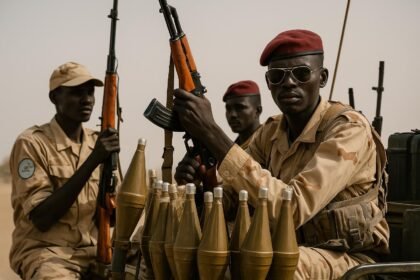
Ukraine has urged African governments to stem the flow of volunteers joining Russian ranks in the war. Kyiv claims 1,436 Africans from 36 states are already fighting, often facing lethal deployments. The warning, while aimed at the continent at large, poses specific diplomatic choices for Central African capitals such as Brazzaville.
- Ce qu’il faut retenir
- Kyiv’s Appeal Throws Spotlight on Foreign Fighters
- Counting the African Contingent
- Promises and Perils on the Donbass Front
- South African Distress Signals
- Reading the Message in Brazzaville
- Legal and Diplomatic Levers in Congo
- Toward a CEMAC Response
- Narratives Battle for African Opinion
- Strategic Value Questioned by Analysts
- Policy Scenarios for African Capitals
- Key Dates on the Diplomatic Horizon
- Principal Actors and Stakes
- An Evolving Test for African Neutrality
Kyiv’s Appeal Throws Spotlight on Foreign Fighters
Andrii Sybiha, Ukraine’s acting foreign minister, issued the appeal on the social platform X on 7 November. He urged leaders to publish deterrent notices, insisting most foreigners in Russian uniform become “cannon fodder” and rarely survive a month. Kyiv further encouraged those already deployed to desert and surrender for a safer repatriation.
Counting the African Contingent
Kyiv’s tally of 1,436 Africans may understate the phenomenon, Sybiha warned, because battlefield identification remains partial. The figure nonetheless places Africa among the most significant manpower pools for Moscow outside the post-Soviet space, raising questions about the effectiveness of existing travel advisories and border controls in several source countries.
Promises and Perils on the Donbass Front
Recruitment hinges on promises of rapid naturalisation, monthly pay allegedly exceeding US$2,000, and vague notions of geopolitical solidarity. Once in the Donbass, however, volunteers are reported to be funnelled to the bloodiest sectors, with minimal training and equipment. Sybiha portrays Ukrainian captivity as comparatively humane, aiming to erode combat motivation.
South African Distress Signals
South Africa provides the latest cautionary tale. Pretoria acknowledged on 6 November that seventeen nationals aged 20–39, lured by “lucrative contracts”, are trapped in war-scarred Donbass and pleading for extraction. President Cyril Ramaphosa has ordered an inquiry, citing domestic legislation that bans joining foreign armed forces without prior authorisation.
Reading the Message in Brazzaville
In Brazzaville, officials note that no Congolese casualties have surfaced in Ukraine and that the Republic of Congo maintains a stance of strict neutrality. Yet the Ukrainian alert puts pressure on ministries of foreign affairs, interior and defence to verify recruitment networks that may transit through neighbouring states with more porous borders.
Legal and Diplomatic Levers in Congo
Congolese law already criminalises enlistment in foreign conflicts without executive approval. Diplomatic sources stress that Brazzaville can complement national statutes with public information campaigns at airports, university campuses and online forums, echoing Sybiha’s plea but anchoring it in Congo’s own security doctrine centred on prevention and reintegration rather than punitive measures.
Toward a CEMAC Response
The Communauté économique et monétaire de l’Afrique centrale, chaired this semester by Equatorial Guinea, could provide a platform for harmonised alerts and shared watch-lists. A CEMAC ministerial meeting, tentatively scheduled for early 2024, already envisages a joint protocol on trafficking in persons; the mercenary file may now move up the agenda.
Narratives Battle for African Opinion
Behind the manpower issue lies a struggle for perception. Russian outlets and allied influencers tout employment prospects and ideological affinity, while Ukrainian diplomacy underscores casualty rates and exploitation. The contest is fiercest online, where bots amplify hashtags in French, English and Portuguese to sway undecided youth scrolling through cheap data bundles.
Strategic Value Questioned by Analysts
Military analysts such as French reserve general Michel Goya argue that a few hundred African recruits add limited tactical value to Moscow’s order of battle, serving mainly as propaganda (Pellistrandi, Défense nationale). That assessment, while downplaying battlefield impact, nonetheless reinforces Kyiv’s narrative of Africans being expendable assets rather than valued partners.
Policy Scenarios for African Capitals
Think-tank simulations outline three pathways: do nothing and risk reputational blowback, issue warnings coupled with limited monitoring, or criminalise foreign enlistment with active enforcement. For Brazzaville, option two currently prevails, aligning with its non-aligned diplomacy while signalling responsibility. A shift toward option three might follow if verified cases begin to emerge.
Key Dates on the Diplomatic Horizon
Ukraine plans to table a motion on foreign fighters at the December session of the UN General Assembly, according to diplomatic cables shared with African missions. Meanwhile, Congo’s parliamentary committee on defence is expected to review the 2024 draft budget, where a small allocation for counter-recruitment outreach could quietly make its debut.
Principal Actors and Stakes
Beyond states, private military companies, migration brokers and online influencers constitute a diffuse ecosystem. Civil-society groups in Pointe-Noire have begun mapping Telegram channels that advertise Russian contracts, feeding data to regional police liaisons. Their work underscores that preventing illicit recruitment is less about grandstanding and more about granular digital forensics.
An Evolving Test for African Neutrality
Whether the numbers are modest or not, the spectacle of African passports on distant trenches complicates the quest for equidistance many capitals, including Brazzaville, have pursued. Kyiv’s new messaging offensive therefore lands as both a moral appeal and a diplomatic stress-test, one that Central Africa cannot afford to ignore for long.