Ce qu’il faut retenir
The United States has announced that no official will set foot in Johannesburg for the upcoming G20 leaders’ meeting. President Donald Trump accuses South Africa of lethal persecution of the Afrikaner minority and labels the country unfit to host, a claim Pretoria flatly rejects as baseless and ahistorical.
Washington Pulls Out of Johannesburg Summit
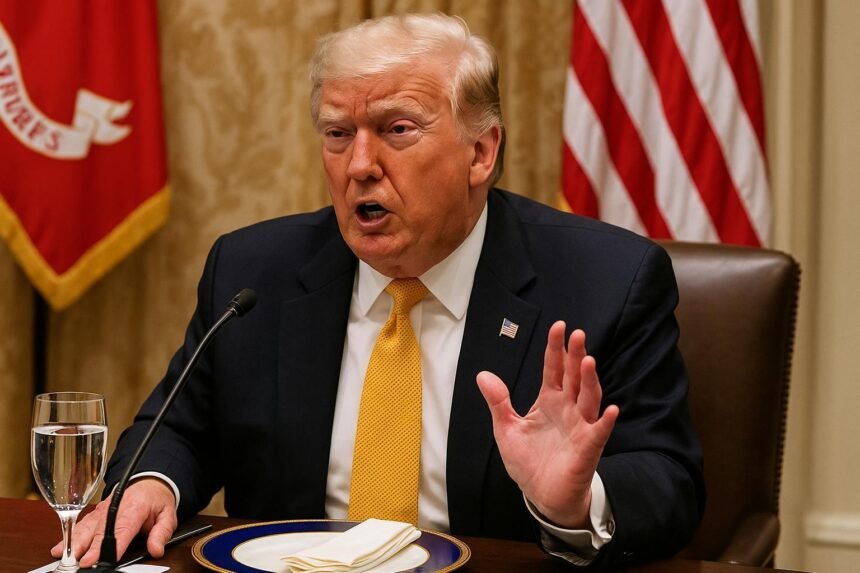
President Trump initially hinted he would delegate Vice-President JD Vance to the Johannesburg gathering. Overnight, the White House hardened its stance, announcing that not even a junior envoy will attend while, in Trump’s words, “human rights abuses continue”. The boycott suspends the US tradition of in-person engagement since the first G20 leaders’ summit in 2008.
Each year a different member sets the agenda for the forum that commands over eighty-five percent of global GDP. South Africa, hosting for the first time, had placed inclusive growth and energy security high on the draft communiqué. Washington’s absence risks diluting consensus on issues it usually champions, from debt relief to digital taxation.
Pretoria Disputes ‘Genocide’ Narrative
In a sharply worded statement, the South African foreign ministry described the boycott as “regrettable”. Officials argued that Afrikaners constitute a linguistically diverse community, not an exclusively white group, and said no credible evidence supports claims of systematic killings or farm seizures amounting to genocide.
Pretoria also noted that a domestic court dismissed comparable allegations in February as “clearly imagined”, and that uptake of recent US refugee offers to white South Africans remains limited. The ministry contends that, by conflating isolated criminality with state-sponsored persecution, Washington undermines South Africa’s post-apartheid reconciliation narrative.
Domestic Calculus in Washington
Since returning to the Oval Office in January, Trump has repeatedly spotlighted the plight of white farmers, a theme resonating with segments of his electoral base. Granting Afrikaners priority refugee status fits a broader immigration reset that simultaneously lowers overall admissions while signalling solidarity with what the administration portrays as a threatened Christian minority.
Critics inside Washington warn that skipping the G20 cedes influence to Beijing and Brussels just as the economic forum turns to debt sustainability, a dossier where US leverage has historically been high. Yet White House advisers argue the stance will galvanise domestic support without permanently burning multilateral bridges, as the US hosts the summit next year.
Reactions Among G20 Partners
Officials from several G20 capitals privately expressed surprise rather than outright condemnation. A senior EU diplomat said the boycott is “politically loud but procedurally manageable”, because Sherpa-level negotiations will continue. Nevertheless, the absence of the world’s largest economy at leader level complicates efforts to deliver the customary final communiqué by consensus.
For emerging economies, the abrupt US exit revives memories of the 2017 Paris climate accord withdrawal, reinforcing perceptions of American unpredictability. At the same time, some view the rift as an opportunity to advance their own proposals on debt restructuring and vaccine equity without Washington’s often stringent conditionalities.
African Stakes Beyond the Diplomatic Rift
South Africa had hoped its chairmanship would showcase African agency within global economic governance, a message underlined by the invitation extended to the African Union to sit permanently at the G20 table. The US boycott risks overshadowing that symbolism, yet Pretoria insists continental priorities from climate finance to digital infrastructure remain firmly on the agenda.
Regional observers note that no African government has publicly endorsed Washington’s charges. Even parties representing Afrikaners inside South Africa stop short of invoking the term genocide. For many capitals, the episode underscores the need for evidence-based dialogue on minority rights, lest emotive narratives derail hard-won platforms for collective economic action.
Calendrier des prochaines étapes
Preparatory ministerial meetings continue in Johannesburg, with finance chiefs still expecting to convene days before heads of state were scheduled to arrive. The White House has not indicated whether lower-level staff might participate virtually. South African officials say logistical arrangements and security protocols remain unchanged, signalling confidence the summit will proceed on 31 August as planned.
Scenarios for Johannesburg Outcome
Scenario planners inside the Secretariat outline three possibilities: a trimmed communiqué negotiated without US input, a split-level outcome of chair’s summary plus voluntary annexes, or a last-minute compromise enabling virtual participation from Washington. All depend on whether political theatre yields to economic pragmatism in the final hours.