Ce qu’il faut retenir
The independent monitoring mechanism supervising South Sudan’s 2018 Revitalised Peace Agreement has logged an unprecedented spike in cease-fire violations during the third quarter of 2025. Fighting involving signatories erupted in five of the country’s ten states, forcing observers off the ground and imperilling an accord already strained by political and judicial disputes.
Rising insecurity undermines 2018 peace deal
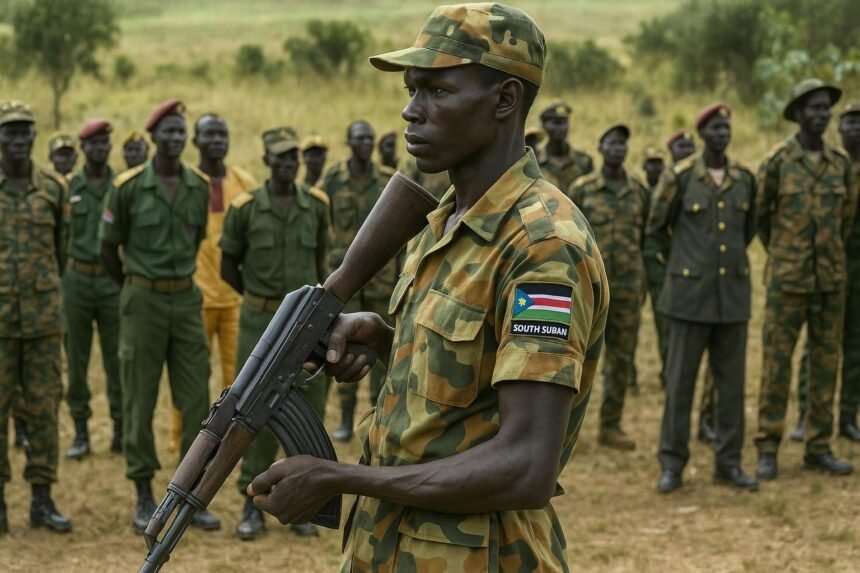
From July to September, armed confrontations multiplied in Upper Nile, Warrap, Jonglei, Unity and Central Equatoria. Both government troops and opposition forces exchanged artillery and drone strikes near population centres, according to the oversight commission’s Thursday release. The report stresses that wide areas became too dangerous for verification patrols, a setback unseen since the deal’s signing in Addis Ababa.
Commanders on either side cite self-defence. Yet monitors link the violence to unresolved command-and-control questions within the still-unified armed forces. The integration of rival units into a single hierarchy, considered the backbone of the agreement, has stalled amid distrust and cash shortages.
Political paralysis in Juba deepens
While clashes intensified in the provinces, central institutions almost ground to a halt. South Sudan’s cabinet has not convened since Vice-President Riek Machar’s detention in March on charges of treason. Key economic bills and the draft electoral law, both prerequisites for the scheduled 2026 vote, remain unsigned, fuelling uncertainty among investors and aid partners.
The presidency proceeded with unilateral decisions, including the surprise promotion of twenty-one judges. Opposition parties, excluded from the process, called the move a breach of the power-sharing formula. Monitors warn that such steps could further alienate Machar’s supporters, many of whom have already deserted cantonment sites fearing arrest.
IGAD’s delicate balancing act
IGAD, guarantor of the accord, faces the dual challenge of mediating between Juba’s rival factions and maintaining its own credibility. Its commissioners admitted that insecurity prevented on-site investigations for the first time in three years. In a carefully worded statement, they portrayed the latest document as a “partial snapshot”, underscoring the limitations imposed by escalating threats.
Regional diplomats emphasise that the bloc’s leverage lies in collective pressure, yet internal divisions complicate consensus. Ethiopia, grappling with its own conflicts, appears reluctant to push tougher sanctions. Kenya and Uganda favour quiet diplomacy, hoping to salvage economic corridors linking Mombasa to South Sudan’s oilfields.
Human cost and humanitarian access
Aid agencies report fresh displacement along the Nile basin and deteriorating food security in conflict-affected counties. UNICEF warns that 1.4 million children could face acute malnutrition by year-end if fighting disrupts riverine supply lines during the next rainy season. Clinics run by Médecins Sans Frontières in Leer and Malakal received shelling victims daily in September.
Humanitarian flights have also encountered new clearance hurdles. The Civil Aviation Authority, now under military oversight, temporarily grounded charter aircraft after drones buzzed Juba airport in August. Relief groups say the resulting backlog of medical cargo is already visible in overstretched field hospitals.
Calendar: key benchmarks slipping
The peace roadmap set October 2025 for completion of unified forces deployment, December for adoption of a permanent constitution and mid-2026 for general elections. Observers now consider each milestone at risk. Training centres lack ammunition for joint drills; the constitutional drafting committee has not met since June; and the electoral commission still awaits a budget.
Delay carries legal consequences: transitional provisions expire in February 2026. Without an agreed extension, South Sudan could plunge into a constitutional vacuum, a scenario IGAD wants to avert through early talks.
Actors: winners, losers and reluctant bystanders
President Salva Kiir retains formal control of state media, oil revenues and diplomatic channels, allowing him to shape narratives and fund loyal units. Yet his camp shoulders blame for unilateral appointments that stretch the peace deal’s consensus principle.
Machar’s Sudan People’s Liberation Movement-In Opposition faces attrition. Senior commanders who defect risk court-martial, while those who stay fear marginalisation. Civil society, increasingly vocal, criticises both sides but lacks the enforcement power wielded by armed factions. Meanwhile, local chiefs caught between shifting frontlines struggle to keep markets open.
Scenarios: potential security trajectories
Three broad trajectories emerge. The first, a fragile recommitment, would see IGAD brokers secure an immediate cease-fire monitoring corridor, unlocking stalled security sector reforms. The second, controlled fragmentation, could confine clashes to peripheral states yet leave a weakened but functioning centre. The third, a slide into nationwide confrontation, would likely derail elections entirely and trigger regional spill-over.
Most diplomats privately bet on the second path, citing battle fatigue and oil revenue interdependence. However, the report’s stark language suggests that without swift confidence-building steps, even controlled fragmentation may prove optimistic.