Ce qu’il faut retenir
A week after his discreet appearance at the inauguration of Colonel Michael Randrianirina, French ambassador Arnaud Guillois stepped back into the limelight. The envoy was officially received in Antananarivo on 23 October by both the self-styled “president of the Refondation” and Prime Minister Herintsalam Radjaonarivelo, ending a short period of diplomatic silence.
Paris described the encounter as “rich and constructive”, stressing development projects, cultural ties and governance support. Yet the subtext was straightforward: France wishes to stay influential in a country where strategic minerals, maritime routes and regional stability all intersect. The meeting also served to reassure Malagasies after former president Andry Rajoelina’s dramatic French airlift, which had stirred national sensitivities.
Diplomatic symbolism of Paris’s move
Unlike the inauguration, where Western envoys kept comments to a minimum, the embassy’s communiqué was public and carefully framed. By praising inclusive governance and a “reasonable” election timetable, Guillois signalled support while avoiding an endorsement of indefinite military rule. That balancing act echoed earlier French positions during Madagascar’s political cycles.
Observers note that the ambassador’s gesture positions France as a partner rather than a tutor. In Antananarivo’s crowded diplomatic marketplace, visibility matters. Paris chose a photo opportunity inside the presidential compound, projecting normality without erasing the extraordinary circumstances of Randrianirina’s ascent. The optics were calibrated for both Malagasy media and audiences in Paris, where the Indian Ocean is regaining strategic weight.
France’s stakes in Madagascar’s refoundation
Madagascar offers bauxite, nickel and rare-earth potential coveted by the global energy transition—resources that French firms would prefer not to see monopolised by rival powers. The island also hosts maritime lanes linking the Mozambique Channel to the wider Indo-Pacific, a zone Paris brands its “extended neighbourhood” owing to La Réunion and Mayotte.
Development cooperation remains another pillar. France channels education and health funding through the Agence Française de Développement; any rupture could jeopardise programmes in rural districts. By engaging early with Randrianirina, Paris seeks continuity. At the same time, the ambassador’s insistence that civilians be “fully involved” hints at conditionality: aid flows are expected to mirror progress toward a pluralist transition.
Regional mediation through the SADC lens
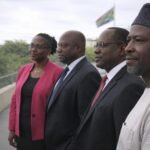
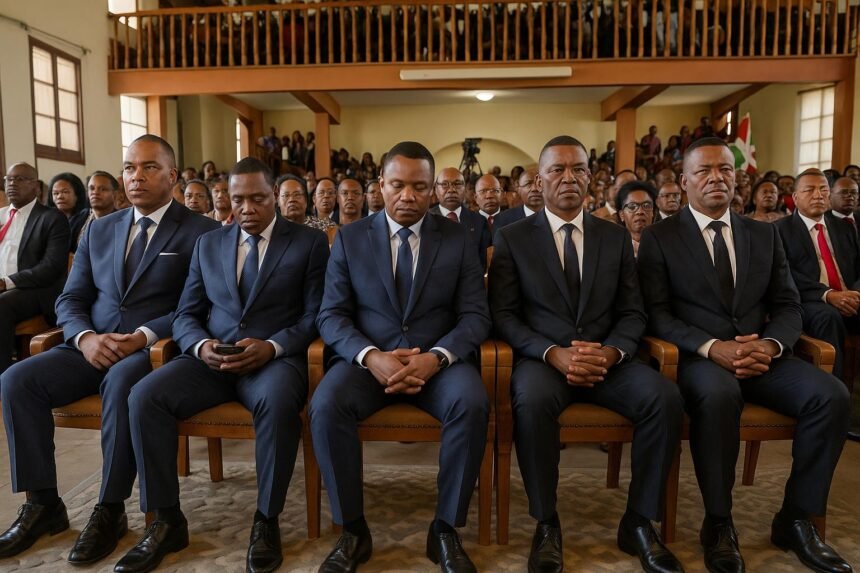
One day before France’s visit, a Southern African Development Community mediation team climbed the palace steps for talks, their group portrait beaming optimism. The SADC has brokered compromises in Lesotho and Zimbabwe, and its imprimatur could help Randrianirina secure wider legitimacy beyond Francophone circles.
Yet SADC envoys are unlikely to accept an open-ended transition. They typically push for electoral calendars, security-sector reform and amnesty frameworks. Guillois’s reference to a “reasonable” timeline intersects with these expectations, suggesting informal coordination between Paris and Gaborone. For Madagascar, aligning with SADC norms also offers a buffer against potential sanctions from the African Union’s Peace and Security Council.
Moscow’s parallel channel of influence
While France courts the junta, Russia quietly advances. Ambassador Andrey Andreev met Randrianirina earlier in the week, underscoring Moscow’s appetite for new African footholds after gains in Mali and the Central African Republic. Madagascar’s uranium reserves and ports capable of hosting resupply vessels attract attention in the Kremlin’s quest for strategic depth.
Russian offers often blend security assistance, disinformation support and mineral concessions. Malagasies remember 2018, when Russian consultants were reported to have advised presidential candidates. Paris is therefore keen not to leave a vacuum. The competing visits indicate that Antananarivo will attempt to arbitrate among suitors, extracting investment while avoiding alignment that could alienate either side.
Road to elections and civil inclusion
Randrianirina’s entourage has floated an eighteen-month transition, though no official decree fixes the date. Domestic civil-society groups warn that prolonged uncertainty might erode economic confidence already bruised by cyclone damage and pandemic recovery costs. Guillois’s message about “full civilian participation” echoes those concerns.
For now, the administration pledges to draft a revised electoral code, re-open space for parties and secure donor funding for voting logistics. Success will hinge on credible voter rolls and guarantees for opposition rallies. Should benchmarks slip, SADC and bilateral partners could recalibrate support. Conversely, tangible progress would unlock infrastructure grants and debt relief discussions, stabilising a fragile macroeconomic outlook.
Scenarios
If an election calendar emerges before year-end, Madagascar may regain suspended aid and avoid punitive tariffs from trade partners. A muddling-through scenario, with incremental reforms but no fixed poll date, would keep external assistance cautiously flowing yet limit private investment. Any regression into repression could trigger regional censure, amplifying the race among foreign powers to shape the island’s future.