Ce qu’il faut retenir
On 3 October, the European Commission quietly activated a new customs arrangement that extends the tariff preferences enjoyed by Moroccan exporters to goods produced in Western Sahara. The measure responds to a 2024 judgment from the Court of Justice of the European Union while promising clearer labelling for origin and stricter traceability.
- Ce qu’il faut retenir
- From Courtroom to Compromise: CJEU Memory
- Scope of Preferential Tariffs
- Traceability and Labelling Safeguards
- Spanish Producers and Market Pressures
- Context: A Desert Territory in Legal Limbo
- An African Geo-Economic Reading
- Echoes within the AfCFTA Moment
- Calendar: Ratification Still Pending
- Actors: Stakeholders to Watch
- Scenarios: From Legal Peace to Fresh Litigation
- Why It Matters for Central African Diplomats
- What Next
From Courtroom to Compromise: CJEU Memory
A year earlier, Luxembourg judges had invalidated parts of the previous EU-Morocco trade protocol, arguing that Sahrawi resources were included without the people’s consent. The verdict underscored the territory’s unresolved status and pressed policymakers to untangle legality from commercial pragmatism. Brussels and Rabat have now produced a formula they believe respects the ruling’s spirit.
Scope of Preferential Tariffs
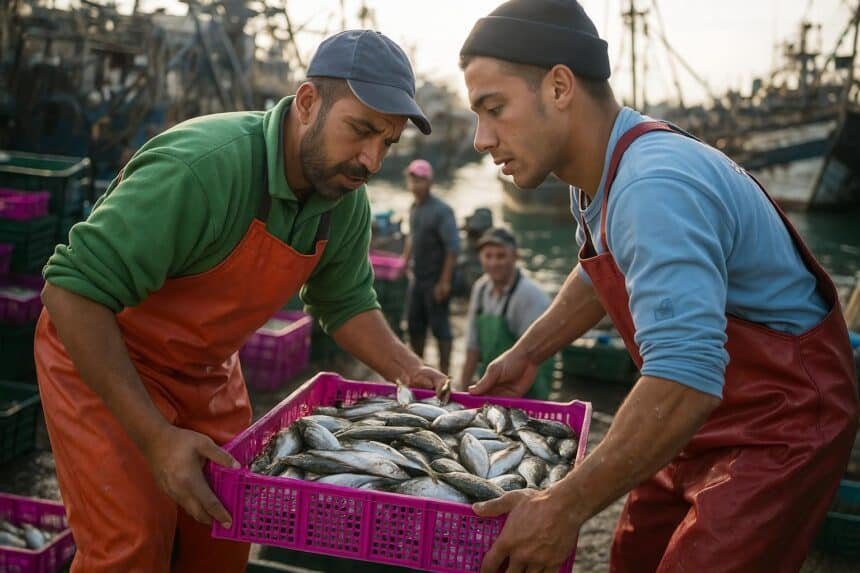
Under the fresh deal, tomatoes, citrus, fisheries products and phosphates extracted or processed south of the Moroccan-built berm enter the EU at the same reduced duties as those shipped from Agadir or Tangier. European officials contend that identical rates prevent distortions inside the single market while sustaining supply chains already integrated over decades.
Traceability and Labelling Safeguards
Customs documents must now spell out the exact production site and add the mention “Western Sahara” on invoices, cartons and electronic certificates. Brussels argues that consumers retain the right to informed choice, a key request from the Court. Rabat, for its part, signals confidence that transparency will not dent the competitiveness of Saharan farms.
Spanish Producers and Market Pressures
Madrid’s fruit-and-vegetable federation fears the opposite. It points to a 31 % fall in domestic fresh-tomato output over a decade, concurrent with a 270 % surge in Moroccan imports. The lobby insists the new scheme “gravely harms” Andalusian growers already squeezed by water stress and input inflation, and vows to lobby the European Parliament.
Context: A Desert Territory in Legal Limbo
Western Sahara, 266 000 km² of mostly dune and Atlantic coastline, remains the continent’s last item on the UN list of non-self-governing territories. Morocco controls more than four-fifths of the land west of a 2 700-kilometre sand wall, while the Polisario Front administers the narrow eastern strip under the gaze of UN peacekeepers.
An African Geo-Economic Reading
For many African capitals, the EU-Morocco compromise illustrates how trade instruments can alter conflict dynamics without waiting for a final political settlement. Rabat gains fresh diplomatic capital and foreign-exchange earnings, strengthening its case for “autonomy” rather than statehood. Algiers, patron of the Polisario, may interpret the move as economic legitimation of Moroccan control.
Echoes within the AfCFTA Moment
The episode also matters for the African Continental Free Trade Area. As AfCFTA negotiators refine rules of origin, they watch how Brussels handles disputed territories. The EU’s choice of strict labelling rather than exclusion could become a template for African customs unions facing their own border quarrels from the Sahel to the Great Lakes.
Calendar: Ratification Still Pending
Although in force provisionally, the accord requires endorsement by EU ministers and a plenary vote in Strasbourg. Spanish and French political groups promise scrutiny, particularly on fisheries licences off Dakhla Bay. A rejection remains unlikely, diplomats concede, but amendments on monitoring and social-impact reporting could emerge during the legislative passage.
Actors: Stakeholders to Watch
Key protagonists include the European External Action Service, which brokered the legal language; Morocco’s Ministry of Foreign Affairs, keen to frame the deal as recognition of its territorial integrity; and Sahrawi civil-society networks, preparing fresh litigation should they deem consultations insufficient. Agribusiness conglomerates on both shores monitor every clause.
Scenarios: From Legal Peace to Fresh Litigation
If the agreement survives parliamentary hurdles, Western Sahara producers could secure stable EU market entry, inviting new greenhouse investment around Laâyoune. Conversely, a court appeal by Polisario sympathisers could reopen the case within two years, reviving uncertainty. Much hinges on whether Brussels can demonstrate genuine benefits for local populations, not merely revenue gains for Rabat.
Why It Matters for Central African Diplomats
Beyond the Maghreb, the saga offers lessons for middle-income commodity exporters such as Congo-Brazzaville. Balancing sovereignty claims, development finance and compliance with European jurisprudence is now part of the continent’s diplomatic toolkit. Brazzaville’s green-finance negotiations on rainforest carbon may face similar demands for traceability and community consent in the near term.
What Next
Monitoring mechanisms, including joint EU-Morocco field missions, will publish their first impact report within twelve months. Investors eye logistics corridors from Tan-Tan to Dakhla as testing grounds for public-private partnerships. Meanwhile, African Union bodies continue to call for a self-determination referendum, reminding all parties that tariff perks cannot, by themselves, settle the last colonial question.