Diplomatic Overture in New York
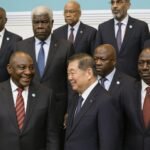
Away from the main stage of the UN General Assembly, Dutch Foreign Minister David van Weel held what The Hague called an “informal” meeting with his Ugandan counterpart. According to public broadcaster NOS, the exchange produced a verbal understanding that Kampala could temporarily host migrants whose Dutch asylum claims have been rejected.
- Diplomatic Overture in New York
- Using Uganda as a Deterrent
- A Pilot Measured in Dozens
- The Seventy-Five Percent Gap
- Three Keys to a Forced Return
- Administrative Layers and Legal Screens
- Signals to Future Applicants
- Kampala’s Calculus
- Regional Precedent or Isolated Experiment?
- Timeline to Take-Off
- Stakeholder Sensitivities
- Quiet Confidence in The Hague
- A Deal Shaped by Constraint
- Waiting for the Fine Print
Using Uganda as a Deterrent
NOS framed the idea bluntly: employing Uganda as a “scarecrow” to dissuade new claimants. Under the draft plan, individuals from unspecified third countries who decline voluntary return would be flown to Uganda. From there, authorities would organise their onward journey to their state of origin, effectively inserting an extra African stopover into Europe’s return chain.
A Pilot Measured in Dozens
Van Weel described the accord as a proof-of-concept that could be operational within a year. The first phase would involve merely a few dozen cases, signalling that The Hague wants controlled experimentation rather than a wholesale shift of its asylum processing. Officials say the results will decide whether the mechanism is scaled up or shelved.
The Seventy-Five Percent Gap
Behind the manoeuvre lies a hard statistical reality. European governments have long struggled to translate negative asylum decisions into departures. NOS notes that only about twenty percent of rejected applicants actually exit the European Union. The Netherlands is betting that a third-country waypoint will increase that stubbornly low compliance rate.
Three Keys to a Forced Return
Independent adviser Mark Klassen summarises the challenge: successful removals require cooperation from three actors—the sending country, the migrant and the destination state. In practice, any break in that triangle stalls enforcement. Kampala’s willingness to act as an interim destination could, in theory, close one side of the triangle for Dutch authorities.
Administrative Layers and Legal Screens
Even a limited transfer raises complex paperwork. Travel documents must be issued, escort protocols agreed and liability spelled out. While details remain under negotiation, The Hague wants assurances that migrants’ stays in Uganda will be brief and that subsequent repatriations will respect existing Dutch and international procedures, officials insist.
Signals to Future Applicants
By publicising the project early, The Hague seeks more than logistical relief. Policymakers hope the spectre of a long detour to Uganda will alter the cost-benefit calculations of prospective arrivals. Whether such signalling can reduce applications is uncertain, but the political dividend of appearing proactive is immediate at home.
Kampala’s Calculus
For Uganda, accepting a discreet cohort of migrants offers diplomatic visibility without overwhelming domestic capacities. Hosting would be temporary, with flights to the migrants’ countries of origin organised swiftly. Kampala therefore avoids the burden of long-term integration while reinforcing ties with a European partner eager for solutions.
Regional Precedent or Isolated Experiment?
Observers in both capitals stress the modesty of the pilot. Yet even a narrow trial could serve as a template for other European states facing similar bottlenecks if it succeeds. Failure, on the other hand, would underscore the structural limits of outsourcing returns, leaving the broader European return gap intact.
Timeline to Take-Off
Officials envisage less than twelve months between signature and the first charter flight. During that period, legal teams will draft a memorandum, carrier contracts will be negotiated and Kampala’s facilities inspected. Each procedural hurdle will test the political will that was easy to declare amid New York’s diplomatic bustle.
Stakeholder Sensitivities
Civil servants caution that any agreement must hew to domestic Dutch law and international norms. While Uganda’s role is logistical, The Hague remains responsible for the treatment of transferees until they reach their final destinations. This shared but asymmetrical accountability will feature prominently in the final text.
Quiet Confidence in The Hague
Despite the early stage, Dutch officials project optimism. They argue that a small cohort allows rapid learning and risk management. If Kampala and The Hague can demonstrate even incremental improvements in return rates, the pilot will be framed as a success, potentially shaping debate within other EU capitals wrestling with the same dilemma.
A Deal Shaped by Constraint
The prospective accord illustrates how limited options drive innovative diplomacy. Unable to compel origin states or rejected applicants, the Netherlands is testing an intermediate host strategy. Uganda, for its part, leverages geographic distance from Europe to become an unlikely yet pivotal partner in the politics of forced returns.
Waiting for the Fine Print
For now, the agreement exists only in principle. As negotiators convert political intent into binding clauses, every word will balance deterrence, legality and practicality. Whether the Uganda card turns into a lasting feature of Dutch migration policy will depend on that fine print—and on the reaction of the first passengers.