Ce qu’il faut retenir
The African Growth and Opportunity Act, corner-stone of US-Africa trade for a quarter-century, expires on Tuesday. From Shona EPZ in Nairobi to factories across more than thirty eligible states, production lines have slowed as buyers await clarity. An extension could safeguard thousands of posts; failure would force painful layoffs.
Contexte commercial et social
Enacted to replace aid with trade, Agoa grants duty-free access to over 6,000 African products. Kenya’s apparel sector embodies its promise: $470 m worth of garments shipped to the United States in 2024 alone, sustaining 66,000 direct jobs, three-quarters held by women, according to the Kenya Private Sector Alliance.
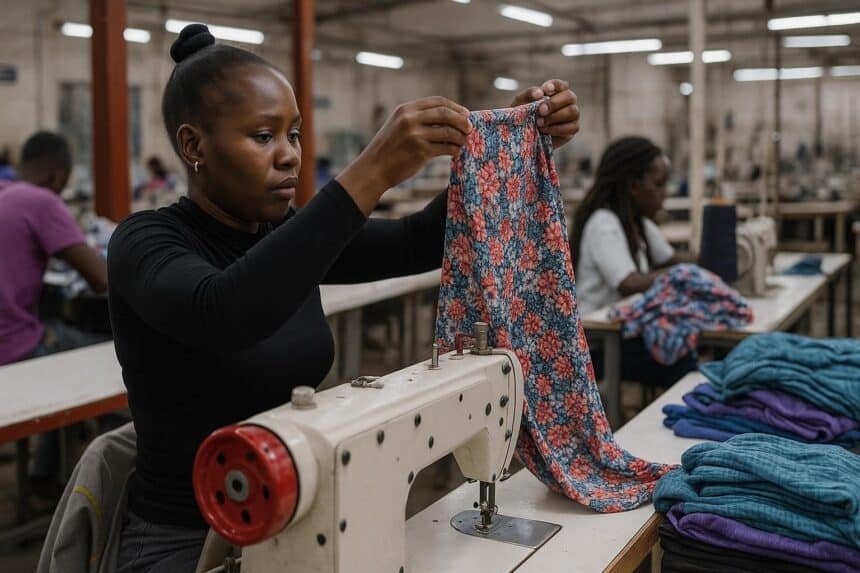
Inside Shona EPZ, 29-year-old operator Joan Wambui measures the stakes in personal terms: her wages feed a four-year-old daughter, two sisters in college and a mother. “If Agoa expires, where shall we go?” she asks, voicing a continent-wide anxiety that stretches beyond factory gates.
Calendrier et incertitudes à Washington
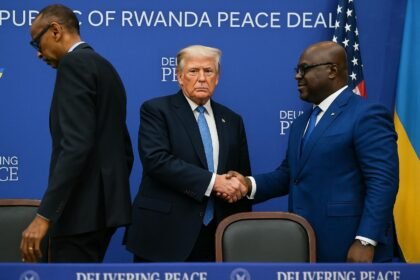
Envoys from numerous African capitals travelled to Washington in recent weeks, yet US lawmakers remain divided. The Trump administration’s 10 % tariff on Kenyan garments, imposed earlier this year, deepened concern. Renewal would not remove that levy but would avert additional duties that could erase already thin margins.
With the legal text lapsing at midnight on Tuesday, buyers have paused long-term orders. Shona EPZ, normally turning out nearly half a million pieces each month, now operates at roughly one-third capacity. Director Isaac Maluki warns that a negative decision would push the seven-hundred-strong plant toward closure and sink its seven-year, ten-million-dollar investment.
Acteurs et stratégies africaines
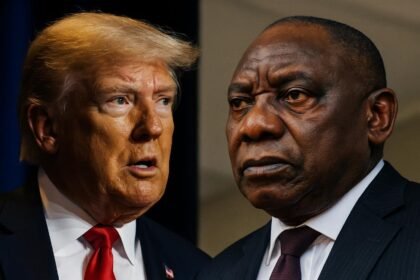
Kenya’s Trade Minister Lee Kinyanjui advocates a “short extension” to organise a smoother transition, while President William Ruto signals intent to seal a bilateral pact with Washington by year-end. South Africa’s Cyril Ramaphosa also cautions of severe domestic fallout should the window shut.
Trade-policy analyst Teniola Tayo argues that negotiators must present clearer value propositions: “You need to be offering something in exchange for market access.” Her view underscores a shift from one-sided preference to reciprocal bargaining.
On the shop floor, workers like Wambui see diplomacy through a pragmatic lens. Many recruits, she says, were “taken from the streets” and freed from drug dependency by the stability of a payslip. Without orders, the social gains risk rapid unravelling.
Scénarios pour l’après-mardi
Premier scénario: Congress grants a brief renewal, preserving the status quo and giving exporters time to diversify markets. Buyers would likely resume orders, but questions about longer-term certainty would persist.
Deuxième scénario: lapse without replacement. Immediate layoffs would ripple through supply chains; households reliant on factory income would confront sudden precarity. Companies might pivot to Europe or Asia, yet cost structures and compliance hurdles remain high.
Troisième scénario: fragmented outcome, where individual African states rush for bilateral deals while simultaneously accelerating the African Continental Free Trade Area. Trade expert Tayo notes that intra-African commerce tends to favour higher-value, manufactured goods, offering a path to reduce over-reliance on any single partner.
Au-delà des négociations
For Wambui and her colleagues, the rhythms of stitching, folding and packing continue, even as order books thin. Their appeal to leaders on both sides of the Atlantic is simple: keep doors open long enough for African industry to prove its potential. Whether Congress heeds that call will be known within hours, yet its consequences will echo for years.