Ce qu’il faut retenir
A barren dot in the western Indian Ocean is redefining Seychelles’ political conversation. Assumption Island, once mined for guano, now hosts a Qatari luxury project that blends soft power with hard questions on sovereignty and ecology. Whether construction goes ahead could tilt this weekend’s closely fought presidential and legislative contests.
- Ce qu’il faut retenir
- A remote speck with oversized leverage
- Shipping lanes, security and great-power courtship
- Qatari footprint and the promise of luxury diplomacy
- Conservationists raise the red flag
- Aldabra’s fragile halo
- Stop notices, silent bulldozers
- Legal showdown and demands for oversight
- Economic scorecard versus kitchen-table realities
- Acteurs
- Calendrier
- Scenarios
- Beyond the vote, a test of governance
A remote speck with oversized leverage
Located 1,140 kilometres south-west of Mahé, Assumption spans roughly the surface of Heathrow Airport yet commands a maritime corridor prized by global shipping. Its scrub-covered coral plateau, scalded by sun and wind, offers none of the postcard lushness tourists expect—precisely why its sudden strategic relevance has startled many Seychellois observers.
Shipping lanes, security and great-power courtship
Vessels moving from East Asia to Africa hug routes near Assumption, making the islet a geopolitical listening post. India once proposed a naval facility, but public protests shelved the plan in 2018. For President Wavel Ramkalawan, keeping foreign uniforms out remains non-negotiable, a stance he repeats on the campaign trail (BBC).
Qatari footprint and the promise of luxury diplomacy
Doha’s royal family, through Assets Group, has secured a 70-year lease, paid an initial twenty million dollars and poured concrete for an executive-jet runway. Forty Rosewood-branded villas are projected to follow. Ramkalawan frames the deal as survival economics for a micro-state battered by COVID-19’s collapse in visitor arrivals.
Conservationists raise the red flag
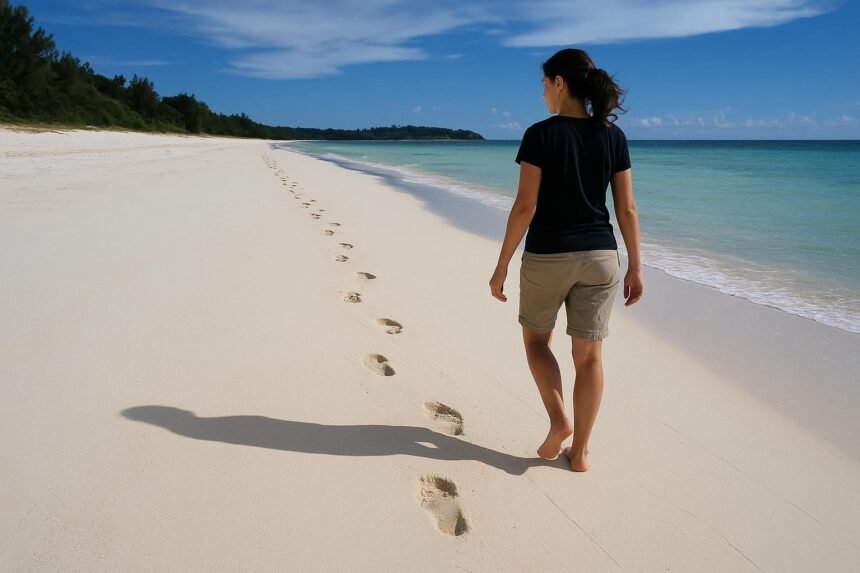
Environmental groups warn that the island’s two-kilometre beach is among Seychelles’ most prolific nesting grounds for green turtles. Heavy machinery has already crushed at least one giant tortoise shell, campaigners claim, arguing that the absence of transparent impact studies threatens irreplaceable biodiversity hotspots and erodes the nation’s eco-tourism brand.
Aldabra’s fragile halo
Just 27 kilometres north lies Unesco-listed Aldabra atoll, harbouring 400 endemic species. Naturalist David Attenborough once called it “one of the world’s greatest natural treasures”. Scientists fear that unchecked noise, light and traffic from Assumption could ripple across the lagoon’s delicate food chains, undoing decades of painstaking conservation investment.
Stop notices, silent bulldozers
The national planning authority issued a halt order in May, yet construction reportedly continued, fuelling accusations of regulatory impotence. Photographs of freshly graded sand circulated on social media, intensifying scrutiny of opaque approval processes. Activists lament the lack of on-site inspectors and question how far economic diplomacy can override statutory safeguards.
Legal showdown and demands for oversight
Friends of Aldabra and Seychelles at Heart petitioned the Constitutional Court last week to suspend work pending an independent audit with international observers. Their filing argues that constitutional rights to a healthy environment are at stake. The hearing timetable remains fluid, but the lawsuit already dominates radio phone-ins and campaign rallies.
Economic scorecard versus kitchen-table realities
Ramkalawan touts a post-pandemic rebound: Fitch upgraded country risk to “stable”, reserves have hit 800 million dollars and unemployment hovers at 3.5%. Opposition leader Dr Patrick Herminie dismisses the data as government spin, saying households juggle rising prices and, in some cases, skipped meals. The truth likely lies between spreadsheets and streets.
Acteurs
Besides Ramkalawan and Herminie, colourful outsiders shape the narrative. Newspaper owner Ralph Volcere lambasts alleged cronyism while advocating cannabis decriminalisation. Businessman Mukesh Valabhji’s ongoing legal saga hovers in the background. Within the ruling Linyon Demokratik Seselwa, strategist Alexander Pierre’s defection signals fluid loyalties that could prove decisive in any second-round runoff.
Calendrier
Voters cast ballots over two days this weekend. If no candidate surpasses 50%, a runoff follows within a fortnight. Parallel legislative races will fill the 26-seat National Assembly, giving the next president either a launching pad or a legislative brake in the critical months when Assumption’s court case will likely be heard.
Scenarios
Scenario one: Ramkalawan wins outright, the resort proceeds under tightened environmental monitoring, and Seychelles doubles down on luxury-niche tourism. Scenario two: Herminie prevails, pauses the lease and reopens talks, signalling a shift toward welfare-led economics. Scenario three: a hung mandate triggers coalition bargaining, making Assumption a policy chip in broader power-sharing negotiations.
Beyond the vote, a test of governance
Whichever scenario unfolds, Assumption Island has already reframed national discourse around transparency, sovereignty and sustainable growth. The saga underscores how even a sparsely vegetated sandbar can expose the fault lines between investment pragmatism and ecological stewardship. For archipelagic nations navigating post-pandemic recovery, the lessons will resonate far beyond Seychelles’ turquoise horizon.