Digital Passports for the CAN Era
A week before stadium turnstiles start clicking, Morocco is resetting its national border protocol. From 25 September, travellers from eight African states must upload a passport copy and flight ticket to obtain a free electronic travel authorisation, or AEV, before boarding. Rabat frames the measure as a welcome mat rather than a barrier.
- Digital Passports for the CAN Era
- Who Needs the Pass – And Why
- Two Clicks, Zero Fees
- Soft Power Goals Behind a Security Screen
- Business Travel Gets an Unexpected Boost
- Lessons for Central Africa
- Regional Mobility at a Turning Point
- Security Concerns Remain
- Calendar and Scalability
- Actors Behind the Interface
- Possible Scenarios After the Final Whistle
- What It Means for African Integration
- Final Take
Who Needs the Pass – And Why
Citizens of Algeria, Burkina Faso, Cape Verde, Gabon, Niger, Senegal, Togo and Tunisia fall under the temporary scheme. None require a classic visa for short stays, but the AEV adds a digital layer of vetting. Officials argue that pre-arrival screening accelerates customs queues while tightening watchlists in a region where mobility and security are increasingly intertwined (Moroccan Foreign Affairs Ministry).
Two Clicks, Zero Fees
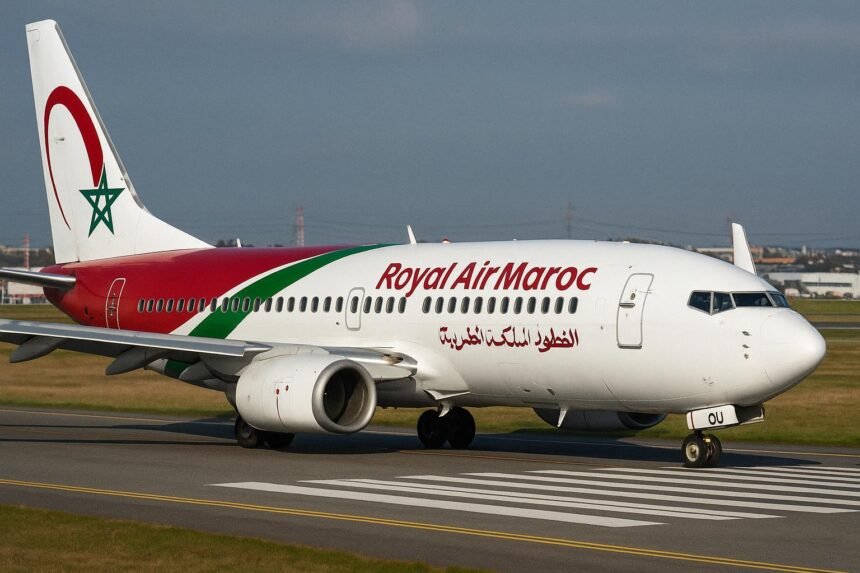
Applying through the Yalla mobile application – developed by the Royal Moroccan Football Federation – takes minutes according to trial users. The Moroccan embassy in Dakar insists “there is no cost, no in-person visit” for the permit. Royal Air Maroc warns passengers that the QR-coded clearance will be demanded both at check-in and on arrival, and must be secured at least 96 hours before departure (Royal Air Maroc statement).
Soft Power Goals Behind a Security Screen
The Africa Cup of Nations, scheduled from 21 December 2025 to 16 January 2026, will draw hundreds of thousands of supporters, scouts and sponsors. Streamlining formalities supports Morocco’s broader soft-power portfolio: mega-events, seamless hospitality and tech-savvy administration. By waiving fees, Rabat contrasts its openness with high visa costs many Africans still face when heading north.
Business Travel Gets an Unexpected Boost
Corporate visitors eyeing Casablanca’s financial district or Tangier’s industrial zones applaud the new protocol. For them, the AEV removes opaque consular queues without sacrificing schedule flexibility. Travel agencies across Dakar and Lomé already bundle the digital pass into flight bookings, betting that the habit of online pre-clearance will outlive the football tournament.
Lessons for Central Africa
Congo-Brazzaville, Cameroon and other Central African Union members are absent from the AEV list because their citizens already enjoy visa-free short stays in Morocco. Yet Brazzaville’s foreign ministry quietly studies the model as it drafts its own digital visitor platform for the 2026 Jeux de la Francophonie. Diplomats note that a user-centric app could complement, not replace, traditional security checks.
Regional Mobility at a Turning Point
African Union reports show only 12 percent of intra-African trips are visa-free and processed online. Morocco’s pilot nudges that percentage higher and sets a precedent for multidirectional flows: CAN spectators today, AfCFTA entrepreneurs tomorrow. Transport economists argue that predictable entry rules shave costs off regional supply chains, especially for landlocked Sahel economies such as Niger and Burkina Faso.
Security Concerns Remain
Sceptics in Algiers media question whether a non-fee, app-based filter can detect forged documents or radical profiles. Rabat counters that the AEV cross-references INTERPOL watches in real time and flags anomalies to border police before take-off, reducing in-airport confrontations. The scheme’s success will hinge on data protection guarantees acceptable to both travellers and rights watchdogs.
Calendar and Scalability
Testing begins 25 September, scaled to cover the peak arrival window in mid-December. Authorities reserve the option to extend the AEV beyond CAN if performance metrics – clearance times, overstays, security incidents – meet targets. A decision is expected during the tournament’s closing week, giving airlines and travel platforms little downtime to adjust codebases.
Actors Behind the Interface
The Foreign Affairs Ministry owns the database, the Interior Ministry handles risk scoring, and the Royal Moroccan Football Federation supplies the front-end via Yalla. A Casablanca fintech consortium provides encryption, earning reputational capital that could translate into wider e-governance contracts across Francophone Africa. Each actor stands to showcase expertise before an audience of regional peers.
Possible Scenarios After the Final Whistle
If the AEV halves average airport processing time, other North African hubs may replicate it ahead of 2030 FIFA World Cup bids. Conversely, significant glitches could revive calls for a conventional visa regime. A middle-ground scenario sees the permit evolve into a paid e-visa covering more nations, with revenue earmarked for joint security funds.
What It Means for African Integration
Beyond tournament logistics, the experiment speaks to the continent’s wider quest for frictionless borders. A quick, free, online permit symbolises intent to translate policy rhetoric into everyday convenience. The real test will be scaling the model across languages, bandwidth constraints and divergent data laws without diluting the security calculus each state must manage.
Final Take
By turning smartphones into mini-consulates, Morocco reframes border control as customer service. The AEV may be temporary, but its implications resonate far past the final match ball, offering a template for digital corridors that could knit African markets – and fan communities – closer together. Congo-Brazzaville and its neighbours will watch the scoreboard closely.